After surgery
You use a prosthesis after you have surgery to remove the whole breast (mastectomy). This is called a full prosthesis. There are also prostheses available if you have surgery to remove part of the breast. These are called partial prostheses.
Some women may have a delayed breast reconstruction after a mastectomy. You can wear a prosthesis after the mastectomy until you have your reconstruction. A breast reconstruction is surgery to create a new breast mound after a mastectomy.
Some women have a prosthetic nipple and areola after breast reconstruction. The areola is the darker area of skin around the nipple.
Find out more about breast surgery
If you have a mastectomy without breast reconstruction, your nurse will give you a lightweight fabric breast shape to put in your bra. This is often called a comfie or softie.
You can wear it right after the operation if you want to, even if the area feels tender. It is very soft and will not put pressure on the wound.
Some women are happy with their comfie and continue wearing it instead of getting another type of permanent prosthesis. These are becoming more available in a range of different skin tones.
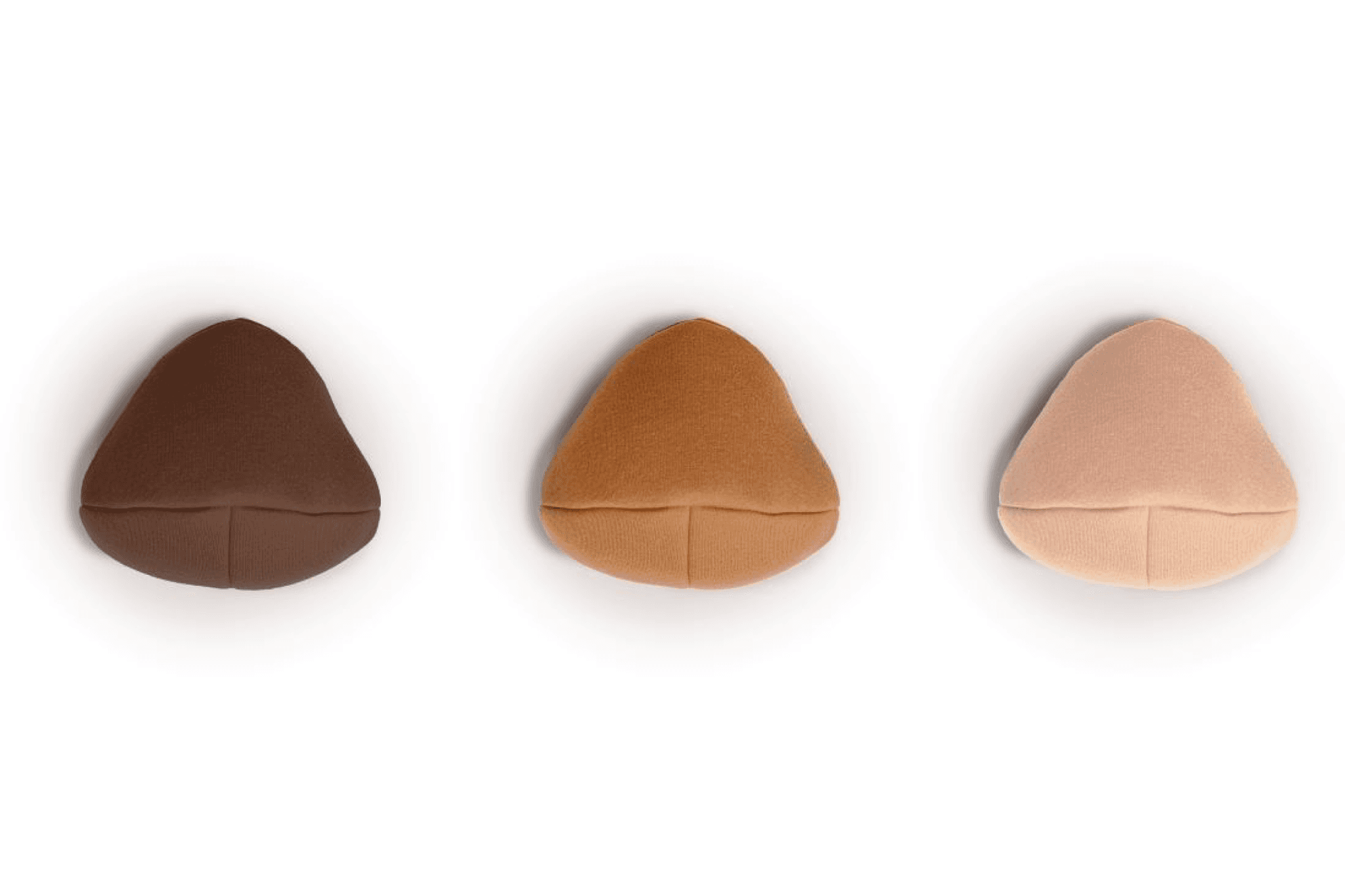
Photo supplied by Nubian Skin
Companies that sell breast prostheses
Your breast care nurse arranges an appointment for a fitting at the breast prosthetic clinic. This is at the hospital where you had your surgery. They have a specially trained prosthesis fitter. They might be your breast care nurse, a surgical appliance officer or another member of staff.
At the appointment you try on several different shapes and get told how to care for it.
Many types of breast prostheses are available free on the NHS. If you are a private patient, you might have to pay for this. Or you can ask for a referral to the NHS prosthesis fitting service.
Before you go to the appointment you should take your bra to see how the prosthesis sits in it.
About 6 weeks after a mastectomy, once your scar has healed and you have finished any radiotherapy you may need, you’ll be ready for your permanent prosthesis.
Sometimes your breast can get swollen a little after radiotherapy. You may prefer to have your prosthesis fitted when you no longer have any swelling.
The permanent prosthesis is made from silicone.
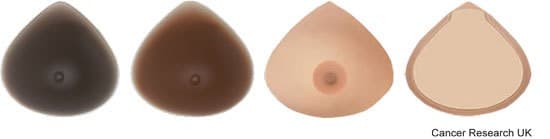
The breast shapes come in different sizes, shapes and colours. Most women should be able to find something they are happy with on the NHS. But if not, there are more choices available if you buy your own from a manufacturer.
Special mastectomy bras are available. They have pockets to hold the prosthesis. But you don't normally need a pocket. If your bra fits well and has full cups (rather than a low plunge), you should be fine.
To look after your prosthesis, you should wash it in warm soapy water and dry it daily.
These prostheses are available if you have part of your breast removed. You wear it inside your bra and it is shaped to fill out the breast outline. It’s made of the same silicone material as most full prostheses.
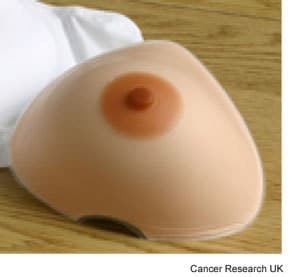
You might use this type of prosthesis if one breast is smaller than the other. The shell fits over the smaller breast. It is also made of silicone.
Some women might have this type of prosthesis following breast reconstruction. They use this while the implant is gradually inflated until it reaches the same size as the other breast.
After breast conserving surgery some women use this to replace the volume or to provide an even shape.
Breast reconstruction methods create a smooth breast shape without a nipple or areola. For most people the breast reconstruction doesn’t feel complete until there is a nipple and areola.
Some women choose to have a stick on nipple and areola. You can get them ready made that you can buy. Or you might have one made specifically for you.
You stick the nipple and areola on every day. It’s easy to take off for washing, and the glue you use is good enough to keep it in the right place all day.
You can wear your usual prosthesis for the occasional swim or make your own swimming prosthesis by cutting an ordinary sponge to fit. However if you are a regular swimmer there are specially made swim prostheses that you can get. These you have to buy as they aren't available on the NHS. They don’t get damaged by the chorine and salt.
If you use your usual prosthesis when swimming, rinse it in clean water afterwards to get rid of any chlorine or salt.
If you use a sponge, you can discreetly press your arm against it when you come out of the water, to squeeze the water out.
Many of the breast cancer organisations supply bras and swimwear for women who have had a mastectomy.
Mastectomy bra and swimwear suppliers
You can get a replacement artificial breast shape on the NHS. You might need a new prosthesis if yours gets worn or damaged. You might also need to replace it if you gain or lose weight.
You can ask your breast care nurse about a replacement. Or you may need to ask your GP for a referral to the breast clinic or a surgical appliance officer in your area.
You will find that you can usually wear the same style of clothes you wore before surgery. Sometimes making small adjustments to your clothes may help.
Wearing clothes that you feel comfortable and good in can make you feel more confident. It may help to talk to other people who have had similar surgery and experiences.
You can talk to other people affected by cancer on our Cancer Chat forum
Your breast prosthesis won’t cause the metal detectors to alarm. But it might alarm for something else you have on. If this happens you are usually pulled aside for a more thorough search such as a pat down. Or you might have a body scan. In this case you might want to let the security staff know you are wearing a prothesis. Some women also carry a letter from their GP or healthcare team about this.
If you have a lightweight silicone breast the air pressure can cause air bubbles to form in the prosthesis. This can look like small black dots. This is temporary and will disappear afterwards.
If you carry your prosthesis in your hand luggage this is classed as medical equipment so won’t be restricted.
This is Pam's story about her diagnosis and surgery.
"I decided not to have a breast reconstruction. I felt that a mastectomy bra and breast sponge would be OK for me."
Last reviewed: 04 Aug 2023
Next review due: 04 Aug 2026
Most people begin their breast cancer treatment with surgery. Find out about the different types of surgery for breast cancer, how to prepare for your operation, and how to recover well.
There are different types of surgery for breast cancer, including mastectomy, breast conserving surgery (lumpectomy), lymph node removal and breast reconstruction. Find out about each of these.
Read about what happens after breast surgery, exercises you need to do, and how to cope with possible problems.
Treatment for breast cancer depends on a number of factors. Find out about breast cancer treatments, where and how you have them, and how to cope with possible side effects.
The main treatments for breast cancer include surgery, chemotherapy, radiotherapy and hormone therapy. Your treatment depends on a number of factors such as how big the cancer is and whether it has spread.
Find out about breast cancer, including symptoms, diagnosis, treatment, survival, and how to cope with the effects on your life and relationships.

About Cancer generously supported by Dangoor Education since 2010. Learn more about Dangoor Education



Search our clinical trials database for all cancer trials and studies recruiting in the UK.

Connect with other people affected by cancer and share your experiences.

Questions about cancer? Call freephone 0808 800 40 40 from 9 to 5 - Monday to Friday. Alternatively, you can email us.
