Coping physically with cancer
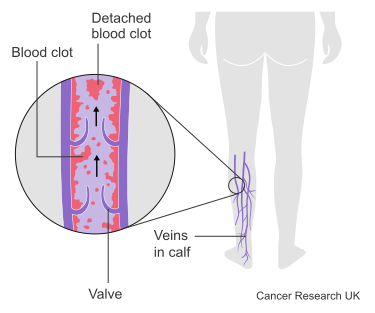
A blood clot is a collection of blood that can form inside a blood vessel. Blood vessels are the tubes that carry blood around the body and include veins and arteries. Blood clots can block the normal flow of blood through the blood vessels. The medical name for a blood clot is a thrombus.
Blood clots can start in different parts of the body. This is most commonly in the legs or the area between your hips. Doctors call this the pelvis. But blood clots may also affect other areas such as the arms.
Veins can be close to the skin, or deep inside the body. When a blood clot forms in a deep vein it is called a deep vein thrombosis (DVT).
All or part of a DVT can break off and travel around the body. It can block all or some of the blood supply to the lungs. If this happens, it’s called a pulmonary embolism (PE). DVTs and PEs together are sometimes called venous thromboembolism (VTE).
Doctors can successfully treat most blood clots when diagnosed. So, it's important to know about the symptoms and report them to your doctor or nurse immediately.
Common symptoms of blood clots include your leg or arm being:
painful
red – this may be difficult to see if you have black or brown skin
swollen
warm to the touch
These symptoms might be just in the part of your leg or arm where the blood clot is. Or they may include all of it.
If a blood clot has moved to your lungs (a pulmonary embolism), the symptoms include:
feeling breathless - this might start suddenly or increase over time
pain in your chest or upper back which gets worse when you breathe in
coughing up blood
feeling lightheaded
People with cancer have a higher risk of developing blood clots. Researchers think that up to 20 out of every 100 people with cancer (up to 20%) develop a blood clot at some point.
There are a number of reasons for this:
People with cancer often have sticky blood. This may be because cancer cells make chemicals that stimulate the body to produce clotting factors.
Clotting factors are proteins made naturally by the liver. They combine with to form blood clots and help us stop bleeding.
You are at a higher risk of developing blood clots if you have one of the following types of cancer:
pancreas
womb
lung
stomach
kidney
brain
bladder
Also, the risk is higher in cancers that have spread to nearby or other parts of the body.
Surgery and other cancer treatments can increase the risk of developing blood clots. This includes the cancer drugs:
cisplatin
tamoxifen
L-asparaginase
thalidomide
lenalidomide (Revlimid)
bevacizumab (Avastin)
Find out more about different cancer drugs from our A to Z list
You may have some cancer drugs into your bloodstream (intravenously). Sometimes this is through a long plastic tube that goes into a large vein in your chest. These include central lines and PICC lines. They usually stay in your veins for many months. So, you don’t need to have needles into your hand or arm each time you have cancer drug treatment. Blood clots can also form in these lines.
Your doctor will explain if the treatments you are having increase the risk of blood clots. They make sure the benefits of these treatments outweigh the risks.
Cancer and its treatment can make you feel very ill. You can feel too tired and weak to move around as much.
The blood flow in your veins depend on them being squeezed by your muscles when you move. Immobility reduces the blood flow in the body and blood can stagnate in the legs and arms and become sticky.
Moving around helps reduce the risk of clots. Even doing leg exercises such as moving your feet up and down in bed or in the chair can help. Especially if you don’t feel well enough to walk around.
After cancer surgery, you may not be able to move around as much as you normally would. Your nurse will give you a pair of elastic stockings to wear. These help to prevent blood clots. You need to wear these until you are moving around fully. This may be for a few weeks after your operation.
Long journeys, such as long haul flights, or long bus or car journeys can also increase the risk of clots. Speak to your doctor or pharmacist if you are planning a long journey. They will talk to you about ways to reduce the risk.
Other factors that increase the risk of developing a blood clot include:
having a blood clot in the past
taking the oral contraceptive pill or hormone replacement therapy (HRT)
certain medical conditions such as diabetes or heart disease
being overweight
having varicose veins – these are veins that are swollen and lumpy under the skin
having an inflammatory condition such as Crohn's disease or rheumatoid arthritis
not having enough fluid in your body (dehydration)
Smoking can also increase the risk of a blood clot. If you would like to stop smoking there are a range of support services and different products to help you.
Read more about how you can stop smoking
If your doctor thinks you might have a DVT, they ask you to have some tests. This can include:
blood tests
an scan of the arm or leg
If they want to check whether you have a PE, they may ask you to have tests including:
a scan to look at your lungs – doctors call this a computed tomography pulmonary angiogram (CTPA)
an (echocardiogram)
(electrocardiogram)
Sometimes your doctor may want you to have other tests. They will explain what the tests are for and how to prepare for them.
Find out more about these tests and scans from our A to Z list
Treatment for blood clots is usually drugs that thin your blood (anticoagulants). They don't break up an existing clot but prevent it from growing bigger and others forming. Your body gradually breaks down the clot and reabsorbs it.
You usually take anticoagulants for 3 to 6 months. Sometimes your doctor may ask you to stay on them for longer.
The most common types of anticoagulants are:
These include:
apixaban
dabigatran
edoxaban
rivaroxaban
These medicines are also used to prevent strokes and to treat blood clots in people who don't have cancer. You don't need to have regular blood tests to check how much of these medicines you should take.
These include:
dalteparin
enoxaparin
tinzaparin
You have low molecular weight heparins as an injection under the skin (subcutaneously). You may need regular blood tests.
Warfarin comes as a tablet. It is a type of anticoagulant called a vitamin K antagonist (VKA). You might have warfarin if you can’t have the other medicines to treat a DVT or PE. It takes several days for warfarin to work so you may also have heparin first.
You may take warfarin for a few weeks or months. You have a regular blood test called an international normalised ratio (INR). This is to check that your blood is not getting too thin or too thick. How much warfarin you take depends on the INR result. Your doctor or nurse will tell you when you need to change the amount and how much to take.
This is a fast acting heparin. You usually have it directly into your bloodstream (intravenously) through an electric pump. You might have it when you're first diagnosed with a blood clot, especially if your kidneys aren't working very well. You normally have daily blood tests while you are having unfractionated heparin.
Read more about how you have cancer drugs
When you are in hospital, your doctor or nurse will assess your risk of developing blood clots. They will suggest you have treatment to prevent blood clots if you are at higher risk of developing them. This might include taking drugs that thin your blood (anticoagulants) – normally low molecular weight heparin.
They may also speak to you to:
wear elastic stockings (anti embolism stockings)
use compression devices (intermittent pneumatic compression)
see a physiotherapist to help you get out of bed and move around as soon as possible
stop taking certain drugs such as the combined oral contraceptive pill or HRT – your doctor will tell you if you need to stop taking any of your medicines
have plenty of fluids so that you don't become dehydrated
You may be given anti embolism stockings to wear until you are moving around as usual. These stockings are tight. This means they squeeze your feet and legs which helps the blood to circulate more quickly. You might also hear them called TED stockings or compression stockings.
Your nurse will measure your legs to make sure you have the right size. They will help you to put them on if you find it difficult.
You cannot usually wear these stockings if you have:
fragile skin, eczema or recently had a skin graft
narrowing of the blood vessels leading to your legs (peripheral arterial disease)
swollen legs
recently had a stroke
tingling or numbness in your fingers or toes (peripheral neuropathy)
an allergy to the material the stockings are made from
Your doctor may suggest you use an intermittent pneumatic compression device. These are similar to the cuffs they put around your arm when you have your blood pressure taken, but larger.
Your nurse wraps the cuffs around your legs and attaches them to an electric pump. This inflates and deflates the cuffs regularly to keep your blood circulating. You use this while you are in bed or in a chair.
Your doctor or nurse will tell you if you need to wear stockings or take blood thinners at home. They will advise you how long to take treatment for and who to contact if there are any problems.
If you've had major surgery to your tummy (abdomen) or pelvis, you may have low molecular weight heparin for 4 weeks after your operation. You have them every day as an injection under the skin (subcutaneous injection). Your nurse will show you how to do it before you go home. Or they might show one of your friends or relatives. Tell your nurse if you don’t have anyone to help give you the injection and you can’t do it yourself.
The video below shows you how to give a subcutaneous injection. The video is 3 minutes long.
Remember to:
take short walks as often as possible
keep active
do simple leg exercises like bending and straightening your toes every hour if you can't move around much
drink plenty of water
report any symptoms to your doctor or nurse straight away
The risk of developing a blood clot is higher in the first few months after being diagnosed with cancer. You might worry about how this complication will affect your cancer treatment.
It is important to understand that blood clots are a common complication if you have cancer. It’s normal to feel anxious about experiencing one.
Remember that doctors can successfully treat blood clots when diagnosed. This should not interfere with your cancer treatment
Last reviewed: 24 Apr 2025
Next review due: 24 Apr 2028
Cancer is the name given to a collection of related diseases. Cancer starts when cells change abnormally.
Learn about the causes of cancer and how to reduce the risk of cancer. We also bust some common cancer myths and provide tips for making healthy changes.
Learn about key cancer symptoms, including common and less known signs. Spotting cancer early saves lives, so tell your doctor if anything is abnormal for you
Treatments can include surgery, radiotherapy and drug treatments (such as chemotherapy, hormone therapy or targeted cancer drugs). Find out about treatments and how to cope with side effects.
Coping with cancer can be difficult. There is help and support available. Find out about the emotional, physical and practical effects of cancer and how to manage them.
Search for the cancer type you want to find out about.

About Cancer generously supported by Dangoor Education since 2010. Learn more about Dangoor Education



Search our clinical trials database for all cancer trials and studies recruiting in the UK.

Connect with other people affected by cancer and share your experiences.

Questions about cancer? Call freephone 0808 800 40 40 from 9 to 5 - Monday to Friday. Alternatively, you can email us.
