Spinal cord compression
Spinal cord compression happens when pressure on the spinal cord stops the nerves working normally. This can cause back pain and other symptoms such as arm or leg weakness or difficulty walking.
It is also called metastatic spinal cord compression (MSCC). Metastatic means that the cancer has spread to the spine from another part of the body.
Symptoms depend on where the pressure in the spinal cord is. Pain is often the first symptom and more than 90 out of 100 people (90%) with spinal cord compression have it. The pain:
could be anywhere in your back, spine or neck
may feel like a tight band around your body
in your spine could be made worse when you cough, sneeze or go to the toilet
is getting worse or doesn’t go away
is stopping you sleeping or wakes you up at night
is made worse by lying flat on your back, or by standing or moving around
Other symptoms might include:
weakness in your legs or arms
difficulty walking
changes to sensations in your body, such as pins and needles or numbness
not being able to go for a wee or poo
difficulty controlling your bladder or bowel
erection problems
Contact your hospital team straight away if you have any symptoms of spinal cord compression. You should have an emergency number to call.
They might ask you to go to your nearest hospital straight away. This might not be your usual hospital. It’s important to follow their instructions so you are seen quickly.
If you can't get through to your hospital team, contact your GP or go to your nearest accident and emergency department (A&E).
The spinal cord is a long bundle of nerves that stretches from the brain to the lower part of the back. The nerves send messages from the brain to control movement and feeling in different parts of our body.
Bones called vertebrae protect the spinal cord. The vertebrae make up the spinal column. Cerebral spinal fluid (CSF), fat and tissue also help protect the spinal cord inside the spinal column.
The nerves from the spinal cord extend into regions. The diagram below shows what regions of the body the nerves control.
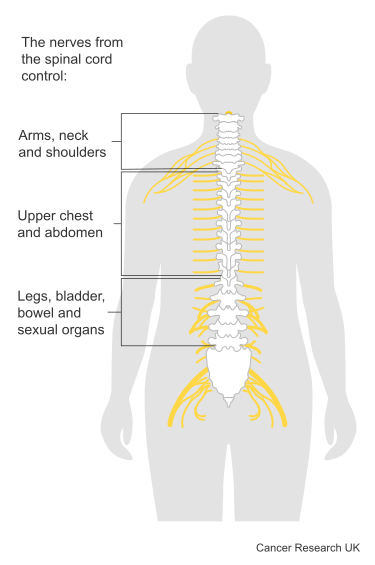
Spinal cord compression happens when there is pressure on the spinal cord. Pressure on the spinal cord causes the nerves in the spinal cord to swell and slows down or blocks their blood supply. This stops the nerves working normally.
Cancer in the spinal bones can cause pressure. There are different names depending on where the cancer started. You might hear it called:
malignant spinal cord compression when the cancer started in the spine
metastatic spinal cord compression when the cancer cells have spread into the spinal bones from another part of the body
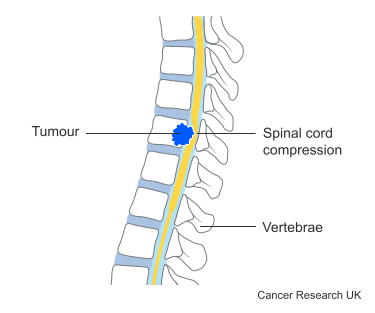
Spinal cord compression can also happen in people who do not have cancer.
Around 3 to 5 in 100 people (around 3 to 5%) with advanced cancer develop spinal cord compression. Almost any type of cancer can spread to the spine.
You’re at higher risk of developing spinal cord compression if you have cancer that:
has already spread to your bones
is at high risk of spreading to your bones, such as prostate, breast, lung or myeloma
started in your spine
You’ll have an urgent MRI scan of your back if your doctors think you might have spinal cord compression. You might also have a CT scan.
You usually have this scan within 24 hours of your doctor suspecting you have spinal cord compression.
Go to information about MRI and CT scans
Your doctor might want to take a sample of the cancer (biopsy) if they aren't sure what type it is. They will only do this if knowing your cancer type affects what treatment you have. And if it doesn't delay any urgent treatment you need.
Starting treatment early helps stop the symptoms getting worse or becoming permanent.
Find out about treatment for spinal cord compression
It can be difficult to cope with the changes caused by spinal cord compression. Having pain has a big impact on how your feel in yourself and interferes with your daily life. To begin with you will need to rest flat in bed which can be very difficult to adjust to. It can be frustrating being unable to move around or do things for yourself.
It’s normal to feel a range of emotions, including being upset and frightened. There is no ‘right’ way to feel and everyone is different.
Tell your healthcare team how you feel. They can find the best person to help.
There are some things that might help:
Getting information about spinal cord compression and your cancer can help you cope, so you know what to expect.
Talking to your health care team about changes they can make to help you be more independent and perform daily activities (such as moving around or washing) - both in hospital and if you plan to go home.
Some hospitals have a complementary therapy service you could access for free.
Last reviewed: 26 Jan 2024
Next review due: 26 Jan 2027
Treatment for spinal cord compression should start as soon as possible. There are several different treatments, including steroids, radiotherapy and surgery.
Coping with cancer can be difficult. There is help and support available. Find out about the emotional, physical and practical effects of cancer and how to manage them.
Search for the cancer type you want to find out about. Each section has detailed information about symptoms, diagnosis, treatment, research and coping with cancer.
Find out about managing cancer symptoms and possible side effects from cancer treatment. There is information about pain, sickness, diet problems and much more.

About Cancer generously supported by Dangoor Education since 2010. Learn more about Dangoor Education



Search our clinical trials database for all cancer trials and studies recruiting in the UK.

Connect with other people affected by cancer and share your experiences.

Questions about cancer? Call freephone 0808 800 40 40 from 9 to 5 - Monday to Friday. Alternatively, you can email us.
