Types and grades
Non-Hodgkin lymphoma (NHL) is a type of blood cancer that affects white blood cells called . It is a cancer of the .
There are many different types of NHL. AITL is a type of peripheral T-cell lymphoma. It is fast growing (high grade).
Lymphoma develops when white blood cells called lymphocytes grow out of control. They move around your body in your blood and your lymphatic system.
The lymphatic system is an important part of our immune system. It has tubes that branch through all parts of the body.
These tubes are called lymph vessels or lymphatic vessels and they carry a straw coloured liquid called lymph. This liquid circulates around the body tissues. It contains a high number of white blood cells (lymphocytes) which fight infection.
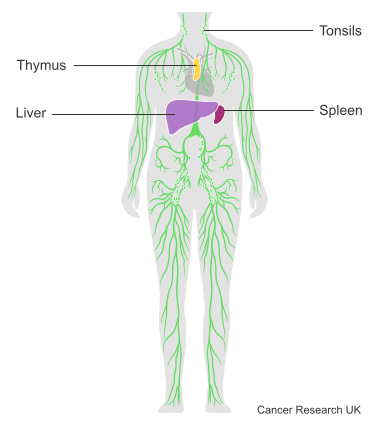
There are two types of lymphocytes: T lymphocytes (T cells) and B lymphocytes (B cells).
AITL develops when the body makes abnormal T lymphocytes. So it is a type of T cell lymphoma. The abnormal lymphocytes build up in the or other body organs. They don't work properly. So they can't fight infection as normal white blood cells do.
It is fast growing, and doctors call it a high grade lymphoma.
Find out more about how doctors group NHL
Symptoms can start or get worse in just a few weeks.
The most common symptom is one or more painless swellings in the:
neck
armpit
groin
These swellings are enlarged . They can grow very quickly.
You might have other general symptoms such as:
heavy sweating at night
high temperatures that come and go with no obvious cause
losing a lot of weight (more than one tenth of your total weight)
Doctors call this group of symptoms B symptoms. Some people may also have unexplained itching. It is important to tell your doctor about any symptoms like this.
Lymphoma can grow in the bone marrow. Lymphoma cells can take up the space of normal blood cells. This can cause low blood cell counts. Symptoms of this includes:
tiredness and shortness of breath
bleeding and bruising
You might have a swollen or liver. This can cause bloating, and you might have tummy discomfort or pain.
The lymphoma cells produce abnormal proteins and the body reacts to these. Doctors call this as an autoimmune reaction. This can cause symptoms such as:
skin rashes
inflammation of your joints
Find out more about the symptoms of NHL
The main test to diagnose AITL is a . A doctor removes a sample from the affected area. This often means removing part or all of a swollen lymph node. They send it to the laboratory for a specialist to look at it under a microscope.
You usually also have some blood tests.
If your doctor diagnoses AITL, you usually have further tests. These might include:
a
a
a to check if you have lymphoma cells in your bone marrow
Find out more about diagnosing NHL
Grade describes how the cells look under a microscope. Your grade tells the doctor how quickly the lymphoma is likely to grow and spread. Doctors put NHL into 2 grades:
low grade (slow growing)
high grade (fast growing)
AITL is fast growing and doctors call it a high grade lymphoma.
You have tests to find out the number of places in your body affected by lymphoma, and where these are. This is your stage. Doctors use your stage to plan your treatment.
There are different systems for staging NHL. Your doctor can tell you more about your stage, and what it means.
There are 4 main stages of NHL (stage 1 to stage 4). Or your doctors might talk about early (limited) stage and advanced stage lymphoma. Early stage usually means either stage 1 or stage 2 lymphoma. Advanced stage usually means either stage 3 or stage 4 lymphoma.
Your treatment depends on:
where your lymphoma is (the stage)
your symptoms
your general health
The main treatments are:
a combination of drugs
a
as part of a clinical trial
Find out more about the treatments for NHL
You usually have a several chemotherapy drugs together. A common combination of chemotherapy drugs is called CHOP. This is a mixture of chemotherapy and steroids. It includes the drugs cyclophosphamide, doxorubicin, vincristine and prednisolone.
Get information on CHOP chemotherapy
In some situations you might have a drug called rituximab alongside chemotherapy. Rituximab is a type of .
This combination is called chemoimmunotherapy and the regime is called R-CHOP.
A stem cell transplant allows you to have very high doses of chemotherapy. You can have a transplant using:
your own stem cells (autologous stem cell transplant)
a donor’s stem cells (allogeneic stem cell transplant)
You might have an autologous stem cell transplant as part of your first treatment for AITL. You might have it after your CHOP chemotherapy, if you responded well to the chemotherapy. This is to try and prevent your lymphoma from coming back. It is intensive treatment so you need to be well enough to have it.
Read more about stem cell transplants
You often have steroids together with chemotherapy for lymphoma. Sometimes you have steroids on their own to treat AITL.
Lymphoma that comes back after treatment is called relapsed disease. You might have:
further chemotherapy treatment using different chemotherapy drugs
a stem cell transplant using donor stem cells - an allogenic stem cell transplant
targeted cancer drugs on a clinical trial
Researchers around the world are looking at the treatments for NHL. Your doctor might suggest you take part in a clinical trial.
Read more about research into NHL
The best person to talk to you about your outlook or prognosis is your doctor. Not everyone wants to know. People cope differently with their lymphoma and want different information.
Survival depends on many factors. So no one can tell you exactly how long you will live. Your doctor might be able to give you some guide, based on their knowledge and experience.
More information about survival for NHL
It can be difficult finding out you have NHL. Some people find it can be particularly worrying in the run up to check up appointments. Advice and support is available to help you cope with NHL and its treatment.
Read more about coping with NHL
Our discussion forum Cancer Chat is a place for anyone affected by cancer. You can share experiences, stories and information with other people who know what you are going through.
Last reviewed: 19 Apr 2024
Next review due: 19 Apr 2027
Non-Hodgkin lymphoma (NHL) is a type of blood cancer that affects white blood cells called lymphocytes. It's the 7th most common type of cancer in adults.
There are many different types of non-Hodgkin lymphoma (NHL). Doctors also give NHL a grade, depending on how quickly it is likely to grow.
The stage tells you about the number and places in your body that are affected by lymphoma. There are 4 stages for NHL. Or doctors describe it as either early or advanced stage.
Your treatment depends on the type and stage of your NHL. Common treatments include chemotherapy, targeted and immunotherapy drugs, radiotherapy and a stem cell transplant.
Practical and emotional support is available to help you cope with non-Hodgkin lymphoma.

About Cancer generously supported by Dangoor Education since 2010. Learn more about Dangoor Education



Search our clinical trials database for all cancer trials and studies recruiting in the UK.

Connect with other people affected by cancer and share your experiences.

Questions about cancer? Call freephone 0808 800 40 40 from 9 to 5 - Monday to Friday. Alternatively, you can email us.
