Types and grades
NHL is a type of blood cancer that affects white blood cells called . It is a cancer of the .
DLBCL is a common type of fast growing (high grade) NHL.
Lymphoma develops when white blood cells called lymphocytes grow out of control. They move around your body in your blood and your lymphatic system.
The lymphatic system is an important part of our immune system. It has tubes that branch through all parts of the body.
These tubes are called lymph vessels or lymphatic vessels and they carry a straw coloured liquid called lymph. This liquid circulates around the body tissues. It contains a high number of white blood cells (lymphocytes) which fight infection.
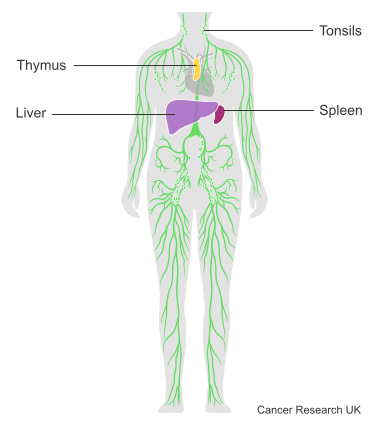
There are two types of lymphocytes: T lymphocytes (T cells) and B lymphocytes (B cells).
DLBCL develops when the body makes abnormal B lymphocytes. So it is a type of B cell lymphoma. The abnormal lymphocytes build up in the or other body organs. They don't work properly. So they can't fight infection as normal white blood cells do.
As the name suggests, diffuse large B cell lymphoma (DLBCL) means this type of lymphoma has:
abnormal B cells that are larger than normal healthy B cells
cancer cells in a spread out (diffuse) pattern rather than being grouped together
Each year about 5,000 people are diagnosed with DLBCL in the UK. This makes up more than 40 out of 100 cases (40%) of NHL in adults.
DLBCL is more common in males than females.
Most people do not have a specific type of DLBCL. This is called DLBCL not otherwise specified (DLBCL NOS).
There are also some quite rare sub types of DLBCL. The treatment for most subtypes is similar.
These rare types include:
T-cell/histiocyte-rich large B-cell lymphoma
Epstein Barr virus positive DLBCL
ALK positive large B cell lymphoma
primary mediastinal (thymic) large B cell lymphoma
intravascular large B cell lymphoma
We have a separate information page about DLBCL that starts in the brain (primary CNS lymphoma).
Read about primary CNS lymphoma
Symptoms can start or get worse in just a few weeks.
The most common symptom is one or more painless swellings in the:
neck
armpit
groin
These swellings are enlarged lymph nodes. They can grow very quickly.
You might have other general symptoms such as:
heavy sweating at night
high temperatures that come and go with no obvious cause
losing a lot of weight (more than one tenth of your total weight)
Doctors call this group of symptoms B symptoms. Some people may also have unexplained itching. It is important to tell your doctor about any symptoms like this.
DLBCL can develop outside the lymph nodes. The symptoms you have depend on where it grows. For example, DLBCL growing in your:
tummy (abdomen) or bowel might cause pain, diarrhoea or bleeding
chest might cause breathlessness or a cough
Read more about the symptoms of lymphoma
The main test to diagnose lymphoma is a . A doctor removes part or all of the swollen lymph node. They send it to the laboratory for a specialist to look at it under a microscope.
You might also have some blood tests.
If your doctor diagnoses lymphoma, you might have further tests. These might include:
a
a to check if you have lymphoma cells in your bone marrow
an to look at your head or spine
a to check for lymphoma cells in the fluid around your brain and spinal cord
Read more about tests to diagnose NHL
Grade describes how the cells look under a microscope. Your grade tells the doctor how quickly the lymphoma is likely to grow and spread. Doctors put NHL into 2 grades:
low grade (slow growing)
high grade (fast growing)
DLBCL is fast growing and doctors call it a high grade lymphoma.
You have tests to find out the number of places in your body affected by lymphoma, and where these are. This is your stage. Doctors use your stage to plan your treatment.
Doctors use different systems to describe your stage. There are different staging systems for adults and children with DLBCL. There are 4 main stages of NHL (stage 1 to stage 4). Or your doctors might talk about early (limited) stage and advanced stage lymphoma.
Early stage usually means either stage 1 or stage 2 lymphoma. Advanced stage usually means either stage 3 or stage 4 lymphoma.
Read more about stages of NHL in adults
If your child has DLBCL, ask your specialist to explain what the stage means.
The best person to talk to about your prognosis or outlook is your specialist.
Your doctor might use test results to give you a prognostic score. The score is based on several factors. This helps doctors to talk to you about your prognosis. And to predict how you might respond to treatment. They call it the International Prognostic Index (IPI). They look at the following factors:
your age
how lymphoma affects your well being, also known as performance status
the level of an enzyme called lactose dehydrogenase (LDH) in your blood
whether your lymphoma is outside the lymph nodes (extranodal disease)
the stage of your lymphoma
These factors score points to give an overall score. This score helps your doctors work out whether your lymphoma is low, intermediate (medium), or high risk. This helps your team to plan the best treatment for you.
Read more about prognostic scores and NHL survival
You have treatment soon after diagnosis. Treatment usually includes together with a called rituximab. Doctors call this chemoimmunotherapy.
For most people, the aim of treatment is to cure your lymphoma.
Treatment might also aim to:
control the lymphoma for as long as possible
control symptoms
stop lymphoma spreading to other parts of the body (such as the cerebrospinal fluid)
stop lymphoma coming back
Talk to your doctor or specialist nurse if you want to find out more about the aim of your treatment.
If there is no sign of lymphoma following treatment, this is called remission. Sometimes, lymphoma can come back (relapse). You would usually then have more treatment.
Your treatment depends on:
where your lymphoma is (the stage)
your symptoms
your general health and fitness
levels of some chemicals in your blood
whether your lymphoma is likely to come back after treatment
The main treatment options for DLBCL are:
combined with and a - doctors call this chemoimmunotherapy
chemotherapy to stop lymphoma spreading to your brain
Some people might have after chemoimmunotherapy.
You have the chemoimmunotherapy drugs on certain days. This is usually over 3 weeks. Each 3 week period is called a cycle of treatment. How many cycles you have depends on your situation.
You usually have chemoimmunotherapy as an outpatient, unless there is a reason why you need to stay in hospital.
After treatment, NHL sometimes doesn't go away or comes back. Your specialist might suggest other types of treatment in this situation including:
CAR-T cell therapy
targeted cancer drugs on their own, or together with chemotherapy
Read about the different treatment types for NHL
It isn't very common to be diagnosed with early stage DLBCL. Most people have advanced disease.
You usually have chemoimmunotherapy. You have it on its own, or combined with radiotherapy.
You might have one of the following:
4 cycles of R-CHOP - your doctor might recommend radiotherapy afterwards
6 cycles of R-CHOP
R-CHOP is one of the main chemoimmunotherapy combinations. It includes the drugs rituximab, cyclophosphamide, doxorubicin, vincristine and a steroid called prednisolone.
Go to our A-Z list of cancer drugs to read about the different drugs
You usually have chemoimmunotherapy. You might have one of the following:
6 cycles of Pola-R-CHP (rituximab, cyclophosphamide, doxorubicin hydrochloride, prednisolone and polatuzumab vedotin)
6 cycles of R-CHOP (rituximab, cyclophosphamide, doxorubicin hydrochloride, vincristine and prednisolone)
Your doctor looks at your test results to work out your prognostic score. They use this score to work out if you have a low, intermediate (medium), or high risk of the lymphoma coming back after treatment. This helps the doctor plan your treatment.
You might have more intensive treatment if you have a high risk of your lymphoma coming back.
There is no for this situation. This means treatment might vary between hospitals, depending on what treatment your doctors recommends.
You might have:
R-CODOX-M (rituximab, cyclophosphamide, vincristine, doxorubicin and methotrexate)
followed by R-IVAC (rituximab, ifosfamide, etoposide and cytarabine)
Or you might have:
R-CHOP (rituximab, cyclophosphamide, doxorubicin, vincristine, and prednisolone)
Pola-R-CHP (rituximab, cyclophosphamide, doxorubicin, prednisolone and polatuzumab vedotin)
You may have a less intensive treatment combination if you are older, or less fit and well. These might exclude certain drugs or have lower doses of drugs to reduce the side effects. For example, R-mini-CHOP.
Lymphoma can spread to your central nervous system (CNS). The CNS is your brain and spinal cord. Some types of DLBCL are more likely to spread to the CNS than others. If you have a high risk, your doctor might recommend treatment to prevent this.
Doctors are uncertain about the best way to prevent lymphoma spreading to the CNS. Research continues to look at this. Your specialist can tell you more about this. And they can tell you whether they think you should have preventative treatment.
You might have treatment to prevent CNS spread if your lymphoma is:
in your breast, testicles, adrenal gland, kidney or blood vessels (intravascular lymphoma)
likely to come back after treatment (high risk)
You might have a high dose of a chemotherapy drug called methotrexate. You have this into your vein (intravenously).
Occasionally, your doctor might suggest injections of methotrexate into the fluid around your spinal cord. This is called . It is very similar to having a lumbar puncture.
Read more about intrathecal chemotherapy
Lymphoma that does not go away with treatment is called refractory lymphoma. Lymphoma that comes back after treatment is called relapsed disease. You might have:
chemoimmunotherapy followed by a
CAR T-cell therapy
chemoimmunotherapy on its own
a targeted cancer drug treatment
radiotherapy
Your treatment plan will depend on what treatment you have already had, and how well you are.
A stem cell transplant allows you to have very high doses of chemotherapy. You can have a transplant using:
your own stem cells (autologous stem cell transplant)
a donor’s stem cells (allogeneic stem cell transplant)
Most people have an autologous stem cell transplant. It is less common for people with DLBCL to have an allogeneic stem cell transplant.
Read more about stem cell transplants
For CAR-T cell therapy a specialist collects and makes a small change to cells called . After a few weeks, you have a drip containing these cells back into your bloodstream. The CAR T-cells then recognise and attack the cancer cells. This is a form of immunotherapy.
You might have it if your lymphoma has continued to grow or relapsed following at least 1 treatment. You need to be well enough for this treatment.
Read more about CAR-T cell therapy
Other treatments you might have include the following drugs:
glofitamab
epcoritamab
loncastuximab tesirine
Read more about targeted cancer drugs for NHL
If you aren't well enough for these treatments, you might have chemoimmunotherapy. You might have polatuzumab vedotin together with bendamustine (chemotherapy) and rituximab.
You might also have radiotherapy to help control symptoms caused by your lymphoma.
Lymphoma and its treatment can cause problems. Supportive treatments can help to either prevent or control these problems.
Supportive treatments you might need include:
medicines to prevent bacterial or viral infections
injections to boost your immune system (GCSF)
You usually have a when you finish treatment. This is to see how well the treatment has worked. The doctors are checking that there are no signs of lymphoma in your body. They call this .
You have regular follow up appointments after finishing treatment. These are appointments to check how you are. And to check there are no signs of the lymphoma coming back. Your appointments might be every 3 to 4 months for at least 2 years.
Your doctor will examine you and ask about any symptoms or side effects. You usually have blood tests. You don't usually have scans unless you have symptoms that are causing a problem.
You can ask any questions at these appointments. Contact your health care team between appointments if you have any symptoms or concerns. You don't need to wait for a booked appointment.
After 2 years, your lymphoma specialist might transfer your care to your GP (family doctor). This is because the risk of your disease coming back after 2 years is small. Talk to your GP if you have any symptoms or concerns. The GP can then contact a specialist again if they need to.
More information about follow up
Researchers around the world are looking at the treatments for NHL. Your doctor might suggest you take part in a clinical trial.
Read more about research into NHL
DLBCL and treatment is likely to cause physical changes in your body. The treatment can be very intense. You might be in and out of hospital for at least a few months. These changes can be hard to cope with and can affect the way you feel about yourself.
You might also have to cope with feeling very tired and lethargic a lot of the time, especially for a while after treatment.
Ask your medical team about possible support and help.
It can help to talk to friends and family. Or join a support group to meet people in a similar situation.
Our discussion forum Cancer Chat is a place for anyone affected by cancer. You can share experiences, stories and information with other people who know what you are going through.
You might need practical advice about benefits or financial help. There is help and support available.
Last reviewed: 08 Mar 2024
Next review due: 08 Mar 2027
You usually start by seeing your GP. They might refer you to a specialist doctor (haematologist) and organise tests.
Your treatment depends on the type and stage of your NHL. Common treatments include chemotherapy, targeted and immunotherapy drugs, radiotherapy and a stem cell transplant.
Practical and emotional support is available to help you cope with non-Hodgkin lymphoma.
Non-Hodgkin lymphoma (NHL) is a cancer of the lymphatic system. There are more than 60 different types of non-Hodgkin lymphoma. They can behave in very different ways and need different treatments.
Non-Hodgkin lymphoma (NHL) in children is a type of blood cancer that affects white blood cells. It is also called a cancer of the lymphatic system.
There are many cancer drugs and cancer drug combinations. All cancer drugs or cancer drug combinations have possible side effects.

About Cancer generously supported by Dangoor Education since 2010. Learn more about Dangoor Education



Search our clinical trials database for all cancer trials and studies recruiting in the UK.

Connect with other people affected by cancer and share your experiences.

Questions about cancer? Call freephone 0808 800 40 40 from 9 to 5 - Monday to Friday. Alternatively, you can email us.
