Types and grades
Follicular lymphoma is a common type of slow growing (low grade) NHL. NHL is a type of blood cancer that affects white blood cells called . It is a cancer of the .
Lymphoma develops when white blood cells called lymphocytes grow out of control. They move around your body in your blood and your lymphatic system.
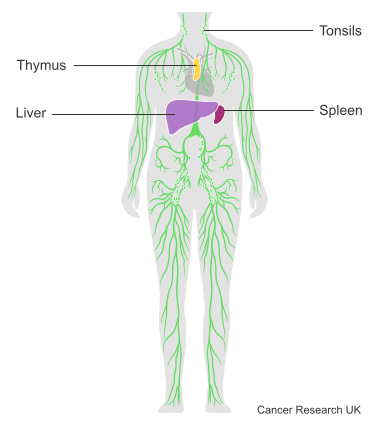
The lymphatic system is an important part of our immune system. It has tubes that branch through all parts of the body.
These tubes are called lymph vessels or lymphatic vessels. They carry a colourless liquid called lymph. This liquid circulates around the body tissues. It contains a high number of lymphocytes which fight infection.
There are two types of lymphocytes: T lymphocytes (T cells) and B lymphocytes (B cells).
Follicular lymphoma develops when the body makes abnormal B lymphocytes. So it is a type of B cell lymphoma. The abnormal lymphocytes build up in the lymph nodes or other body organs. They don't work properly.
Doctors call it 'follicular' because the cells usually develop in clumps called ‘follicles’.
Follicular lymphoma is the most common type of low grade lymphoma. Each year around 2,300 people are diagnosed with follicular lymphoma in the UK.
Out of all people with NHL in the UK, around 20 in 100 (around 20%) have follicular NHL. It mainly affects adults over the age of 60.
Some people with follicular lymphoma have these symptoms. But some don't have any symptoms.
The most common symptom is one or more painless swellings in the:
neck
armpit
groin
These swellings are enlarged lymph nodes.
You might have other general symptoms such as:
heavy sweating at night
high temperatures that come and go with no obvious cause
losing a lot of weight (more than one tenth of your weight)
Doctors call this group of symptoms B symptoms. It is important to tell your doctor about any symptoms like this.
Feeling very tired (fatigue) can be a symptom.
Follicular lymphoma can sometimes develop outside the lymph nodes - for example, in the bone marrow. This can cause symptoms such as:
low (anaemia) causing tiredness or breathlessness
low counts, causing bruising or bleeding problems
Read more about symptoms of NHL
The main test to diagnose lymphoma is a lymph node . A doctor removes part or all of the swollen lymph node. They send it to the laboratory for a specialist to look at it under a microscope.
You might also have some blood tests.
If your doctor diagnoses lymphoma, you might have further tests. These include a and a .
Read more about tests to diagnose NHL
Grade describes how the cells look under a microscope. Your grade tells the doctor how quickly the lymphoma is likely to grow and spread. Doctors put NHL into 2 grades:
low grade (slow growing)
high grade (fast growing)
Follicular lymphoma is usually slow growing and called a low grade lymphoma.
Doctors might further divide follicular lymphoma into 3 grades. These are:
grade 1
grade 2
grade 3 - this is divided into 3A and 3B.
Grade 1, 2 and 3A are low grade or slow growing. Doctors treat them the same way.
Grade 3B is faster growing. Doctors usually treat these similar to high grade lymphoma.
You can ask your doctor about the grade of your follicular lymphoma and what this means for you.
Read about how doctors group NHL
You have tests to find out the number of places in your body affected by lymphoma and where these are. This is your stage. Doctors use your stage to plan your treatment.
Doctors describe your stage in different ways. There are 4 main stages of NHL (stage 1 to stage 4). Or your doctors might talk about early (limited) stage and advanced stage lymphoma.
Early (limited) stage usually means either stage 1 or stage 2 lymphoma. Advanced stage usually means either stage 3 or stage 4 lymphoma. Some people with stage 2 bulky lymphoma might have advanced disease, depending on their situation.
Read more information about the stages of NHL
The best person to talk to about your prognosis or outlook is your specialist. Not everyone wants to know. People cope differently with their lymphoma and want different information.
Survival depends on many factors. So no one can tell you how long you will live. Your doctor might be able to give you some guide, based on their knowledge and experience.
Your doctor might use test results to give you a prognostic score. They use a scale called the Follicular Lymphoma International Prognostic Index (FLIPI). The score is based on several factors. These include your age, the stage of your lymphoma and some blood test results. This helps doctors to talk to you about your prognosis. And to predict how you might respond to treatment.
We have more information about the FLIPI and survival statistics on our survival page.
Follicular lymphoma usually grows slowly. You might not need treatment for many years. At diagnosis, your doctor carefully assesses your situation. They decide if you need treatment straightaway. And if you do need treatment, what treatment is best for you.
Your treatment depends on the stage of your lymphoma.
Early (limited) stage usually means you have stage 1 or 2 non-Hodgkin lymphoma.
The main treatments are:
active monitoring (watch and wait)
Radiotherapy uses high energy waves similar to x-rays to kill cancer cells.
You often have radiotherapy to treat early stage follicular lymphoma. You have radiotherapy to the affected lymph nodes. This can help to control the lymphoma for a long time and may cure it.
Read more about having radiotherapy for NHL
You might not have treatment straight away. You have regular check ups instead. This is called active monitoring, or watch and wait.
You might have active monitoring if you don't have any symptoms, and the doctor removed all of your lymphoma when they did the . And if there is no sign of disease elsewhere in your body. Or you might have active monitoring if your doctor doesn't think radiotherapy is suitable for you.
How often you have check ups depends on your situation. You might have appointments every few months at first. These might become less often if you are well and nothing changes. At your appointment:
the doctor exams you
you have blood tests
You usually only start treatment when you have symptoms. When the symptoms start, you have the same treatment as someone with advanced follicular lymphoma.
Advanced disease means you have stage 3 or stage 4 lymphoma. Some people with stage 2 bulky lymphoma might have advanced disease. This depends on the situation, your doctor or nurse can explain this to you.
The main aim of treatment is to control your lymphoma for as long as possible, rather than to cure it. Treatment can often control the disease for several years. Doctors sometimes call this remission. Remission usually means there's no sign of lymphoma in your body.
When the lymphoma comes back (relapses), you can usually have more treatment to control the lymphoma again. But second and later remissions are usually shorter than the first remission.
There are several phases of treatment. These are:
active monitoring (watch and wait)
first line treatment
maintenance treatment
further treatment if your lymphoma comes back
Your doctor might decide not to give treatment if you don't have any symptoms. Instead, your doctor monitors you with regular check ups. This is called active monitoring or watch and wait.
Your doctor chooses to do this because you have no symptoms bothering you and your lymphoma can be very slow growing. All treatment has side effects, so doctors don't want to give people treatment they don't need. At the moment there is generally no evidence to show that it's helpful to give treatment straight away to people with advanced low grade NHL, if they don't have symptoms.
Your GP or haematologist will keep a close eye on you. You will have regular appointments and blood tests. They are looking for any changes in your lymphoma. You start treatment if your lymphoma gets worse or you develop symptoms.
It can be difficult to cope with not having treatment, especially when you have been told you have lymphoma.
Your first treatment is called first line treatment.
Your doctor might recommend a drug such as rituximab on its own as a first line treatment. Rituximab is a type of cancer drug called a monoclonal antibody. It helps your immune system to find and kill the lymphoma cells.
You might have this if you have advanced disease with no symptoms. This might delay the need to have chemotherapy and rituximab. Having the 2 treatments together are likely to cause more side effects than rituximab alone.
Your doctor might offer you a combination of drug treatments if you have symptoms. You usually have a course of chemotherapy together with a drug. This combination is called chemoimmunotherapy.
Common chemotherapy treatments for follicular lymphoma include:
bendamustine
a combination of cyclophosphamide, doxorubicin, vincristine and dexamethasone (CHOP)
a combination of cyclophosphamide, vincristine and prednisolone (CVP)
chlorambucil
These are all chemotherapy drugs except dexamethasone and prednisolone, which are .
Monoclonal antibodies are a type of . You might have one of the following:
rituximab
obinutuzumab
When these drugs are combined with a chemotherapy regimen such as CHOP, you might see it written as R-CHOP or O-CHOP.
For further information about drug treatments on this page, go to our A-Z list of cancer drugs
Once you are in remission, you have treatment to try to delay the lymphoma coming back. This is called maintenance treatment.
You usually have rituximab or obinutuzumab every 2 months. You have this for up to 2 years.
Follicular lymphoma tends to come back at some point. You might not need treatment straight away if you don't have any symptoms.
If you do need treatment, there are lots of options. You might have one of the following:
a combination of 3 or 4 chemotherapy drugs with rituximab - you might have the same treatment you had before if you were in remission for a long time
a single chemotherapy drug, with or without rituximab or obinutuzumab
rituximab on its own
lenalidomide with rituximab
You might have radiotherapy to a part of your body to help manage symptoms.
Your lymphoma might go back into remission after treatment. You may then have rituximab or obinutuzumab as a maintenance treatment for up to 2 years.
Your doctor might suggest joining a clinical trial. Trials might be looking at newer drugs with or without standard treatment.
Your doctor might recommend more intensive treatment following your second relapse, or a later relapse. You have high dose chemotherapy and a stem cell transplant. You must be fairly fit and well to have this treatment.
Read more about the different treatments for NHL
Over time, low grade lymphomas can sometimes change into a faster growing (high grade) lymphoma. Doctors call this transformation.
Transformation doesn't always happen. If it does, it might be many years after you were first diagnosed with your lymphoma.
Treatment when a low grade lymphoma transforms is the same treatment as a high grade lymphoma.
This is usually a combination of chemotherapy drugs and you might also have rituximab. The drugs you have depends on the type of high grade lymphoma you have. You might have a stem cell transplant.
Transformed lymphomas used to be harder to treat. But treatments are improving for this group of people. This is particularly since the introduction of rituximab and other drugs. Some people can be treated successfully.
More about treatments for high grade lymphoma
After treatment, you have regular follow ups. A doctor will examine you and ask about your symptoms, or treatment side effects. You usually have blood tests. You might have other tests depending on what treatment you have had.
You don't usually have a scan as part of your routine check ups.
Your appointments might be every few months at first. They might become less often if you are well and your disease is stable. Take the opportunity to ask questions. Get in touch with your health care team between appointments if you have any symptoms or concerns. You don't need to wait for a booked appointment.
Your medical team will go through what symptoms to look out for, and who to contact.
Researchers around the world are looking at the treatments for NHL. Your doctor might suggest you take part in a clinical trial.
Read more about research into NHL
It can be very difficult coping with a diagnosis of low grade lymphoma. For many, it is a chronic condition that you live with.
Some people find that a watch and wait approach makes them anxious. It can be particularly worrying in the run up to check up appointments. But other people feel relieved that they don't need treatment just yet. And they feel able to carry on with work or carry on with other plans.
You might have periods of time when you are in remission and are well. Then times when your lymphoma has relapsed and you need to start treatment again.
It can help to talk to friends and family. Or join a support group to meet people in a similar situation.
Last reviewed: 05 Mar 2024
Next review due: 05 Mar 2027
You usually start by seeing your GP. They might refer you to a specialist doctor (haematologist) and organise tests.
Your treatment depends on the type and stage of your NHL. Common treatments include chemotherapy, targeted and immunotherapy drugs, radiotherapy and a stem cell transplant.
There are many cancer drugs and cancer drug combinations. All cancer drugs or cancer drug combinations have possible side effects.
Practical and emotional support is available to help you cope with non-Hodgkin lymphoma.
Non-Hodgkin lymphoma (NHL) is a type of blood cancer that affects white blood cells called lymphocytes. It's the 7th most common type of cancer in adults.

About Cancer generously supported by Dangoor Education since 2010. Learn more about Dangoor Education



Search our clinical trials database for all cancer trials and studies recruiting in the UK.

Connect with other people affected by cancer and share your experiences.

Questions about cancer? Call freephone 0808 800 40 40 from 9 to 5 - Monday to Friday. Alternatively, you can email us.
