Living with prostate cancer
The possible bladder problems depend on what treatment you have. Your doctor will tell you about the treatment side effects. These can include:
leaking urine
bladder inflammation
difficulty passing urine
Your healthcare team will tell you what you can do to help with these problems. This includes muscle exercises, bladder training, surgery or medicines.
Surgery to remove the prostate gland is called radical prostatectomy. When you wake up from your operation you have a urinary You have this in place for one to two weeks. You go back to hospital for one of your team to remove the catheter.
You're likely to have some urine leakage when they take it out. It’s a good idea to have a supply of incontinence pads at home and to take a couple with you to hospital. You can buy these at supermarkets and pharmacies.
Leaking urine can affect what you do and where you go in the weeks after your operation. How this affects you can vary. Some men don't have any problems. But others can have dribbling of urine or they can leak larger amounts. You might notice this is worse when you cough or sneeze. This is called stress incontinence. Or you might leak urine when you have an erection or orgasm.
It’s hard to say how long it will take for you to get back your bladder control. This varies between men and depends on:
the type of surgery you had
whether you had any problems before or during your operation
Most people get better within 3 to 6 months of their operation. But for some, it takes 1 or 2 years. A small number of men might need treatment to help with permanent urinary problems.
You might have difficulty passing urine after surgery. This is called urine retention. It happens because scarring causes the to become narrow. This isn’t a very common problem after surgery
Find out more about radical prostatectomy
You might have some problems with passing urine after radiotherapy.
Radiotherapy can irritate the bladder lining and urethra. This is called radiation cystitis. It can cause symptoms such as:
feeling like you have to pass urine more often than usual
a burning or sore feeling when you pass urine
feeling that you can’t wait when you need to pass urine
The side effects you get depend on the type of radiotherapy you have. And whether you had any urinary problems before your treatment.
It might gradually get harder to pass urine over a few weeks or months after the radiotherapy ends. This is due to the treatment causing a narrowing of the urethra. The narrowing is called a urethral stricture. You may be able to have a small operation to widen the urethra if this happens.
You might leak urine after radiotherapy but this is less common.
Leaking urine is one of the most common problems after prostate cancer surgery. You might find it difficult to cope with this side effect. But there are things you can do and people who can help you and your family to cope.
Your doctor or specialist nurse can refer you to a continence clinic if this becomes a problem. They can help you with pelvic muscle exercises and bladder training.
Pelvic floor exercises target and strengthen the muscles that control your bladder. Your doctor or specialist nurse will talk you through what to do. Research has shown that pelvic floor exercises can help you stop or reduce urine leakage.
If you have not had information about pelvic floor exercises, ask your specialist nurse. Or ask to see a physiotherapist that can talk you through them.
You can find out more about how to do pelvic floor exercises on the NHS website.
Don’t cut down on your fluids, drink at least 2 litres a day. You can drink plenty during the day, but it might help to limit fluids 2 hours before bedtime. Drinking plenty helps your bladder regain its tone.
You might need to wear pads when you first start going out. There are different types of pads. You might be able to get some pads for free on the NHS, although this may depend on the service in your area. Some GP practices have a continence nurse you can see.
It can also help to visit places where you know there are toilets. Or you can telephone beforehand to find out about toilets and how easy they are to get to.
You might find it useful to get some incontinence sheets for your bed. This might not be necessary but could be reassuring. You could try a urinary sheath. The sheath looks a bit like a condom with a hole at the end. It fits on your penis and is connected to a tube and bag. Any leaked urine can drain into the bag. This might be particularly useful at night to help you sleep better.
You can get a card to show to staff in shops or pubs etc. It allows you to use their toilets, without them asking awkward questions. You can get the cards from Disability Rights UK or the Bladder and Bowel Community. They also have a map of all the public toilets in the UK.
You could get a key to disabled toilets if you need to access them quickly. You buy the RADAR key from Disability Rights UK. But this should only be used by people who need quick access to a disabled toilet due to a disability or medical condition.
Plan your trips out.
Find out where the toilets are.
Take extra pads and spare underwear.
Organise a ‘Just can’t wait card’ or key for disabled toilets if you need it.
Do your pelvic floor exercises regularly.
Bladder training encourages your bladder to hold larger amounts of urine for longer periods of time. You keep a diary of when you go to the toilet and gradually increase the time between each visit.
Visit the Bladder and Bowel Community website
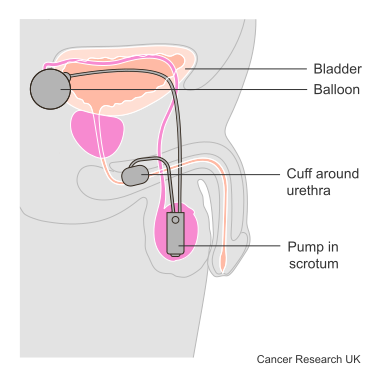
Your doctor might suggest that you have surgery to fit an artificial urinary sphincter (AUS). This might be an option if:
your urinary leakage is severe
other methods, such as pelvic floor exercises and bladder training, do not help
During the operation your doctor puts an inflatable ring around the urethra. The ring attaches to a small pump in your scrotum. You use this to deflate the ring when you want to pass urine.
This device could reduce the amount of urine leakage or stop it altogether. But the operation can be difficult. You can discuss this with your urologist.
Radiotherapy inflames the lining of your bladder and the urethra. This is called radiation cystitis. It can mean you need to wee more often or burn when you wee.
Let your doctor know if you have these symptoms. Particularly if your urine is cloudy or smelly. This could be a sign of infection.
Radiation cystitis usually gets worse during radiotherapy and for a few weeks afterwards. You should start to feel better within a few weeks or months of finishing. Some men might have more delayed side effects. Urinary problems can develop months or years later. You have a higher risk of side effects if you have internal radiotherapy as well as external radiotherapy.
Talk to your doctor if you have bladder problems. They can refer you to a continence clinic. They can help you with muscle exercises, bladder training and medicines. Other treatments may also be available, depending on your situation.
Drink at least 6 to 8 glasses each day. Don’t cut down on your fluids. You can drink plenty during the day, but it might help to limit fluids 2 hours before bedtime.
Some people think that cranberry juice can help but others feel it makes the soreness worse. Research studies haven’t found that it helps. Don’t drink cranberry juice if you are taking warfarin.
You might find that some drinks increase the soreness, such as tea and coffee. You can experiment for yourself and see what works for you. Don’t take potassium citrate, which is an old fashioned remedy for cystitis. You might hear it called mist pot cit for short. This drug can be very harmful if taken in large amounts.
You can get a ‘Just can’t wait’ card to show to staff in shops or pubs etc. It allows you to use their toilets, without them asking awkward questions. You could get a key to disabled toilets if you need to access them quick.
You can get the cards and key from Prostate Cancer UK, Disability Rights UK or the Bladder and Bowel Community. They also have a map of all the public toilets in the UK.
Bladder training encourages your bladder to hold larger amounts of urine for longer periods of time. You keep a diary of when you go to the toilet and gradually increase the time between each visit.
Your doctor might prescribe medicines if they are likely to help your symptoms. For example, you might have a medicine from a group of drugs called anticholinergics or alpha blockers. They help to relax the bladder muscle. They help the bladder to hold more urine before you feel the need to go, and making it easier to pass urine.
Your doctor puts thin wires (electrodes) on your lower back. This sends gentle pulses of electrical signals to the nerves that control passing urine. If this helps you, a permanent nerve stimulator is then put into your buttock area.
You might have problems passing urine after radiotherapy or surgery. You might find it difficult to pass urine. Or you might not be able to pass urine at all. This is called acute (sudden) urinary retention. It can be due to a narrowing of the urethra (urethral stricture).
Acute urinary retention is an emergency. You need to go to the hospital straight away if this happens. You might have a .
A doctor may be able to stretch the narrow area during a short operation. They might slide a thin rod into the urethra to widen it. Or they may use a thin flexible tube with a light and camera on the end. They can see the narrowed area. They put a tiny knife down the tube to cut away tissue and open up the urethra. You have these operations under or .
You might need to have this operation repeated if the urethra gets narrower again.
Talk to your GP about help with your urinary problems. Community continence advisers can visit you at home. Or you could ask to be referred to a specialist incontinence clinic.
You can phone the Cancer Research UK nurses on freephone 0808 800 4040, from 9 am to 5 pm, Monday to Friday. They will be happy to answer any questions.
If you want to find people to share experiences with online, you could use Cancer Chat, our online forum.
Last reviewed: 05 Aug 2025
Next review due: 05 Aug 2028
Surgery to remove your prostate gland is called radical prostatectomy. Most people in the UK have robotic assisted keyhole surgery.
Radiotherapy uses high energy waves similar to x-rays to kill prostate cancer cells. You might have external beam radiotherapy or internal radiotherapy (brachytherapy).
Get practical and emotional support to help you cope with a diagnosis of prostate cancer, and life during and after treatment.
Prostate cancer treatments can affect your sex life in different ways. Some treatments can damage the nerves or affect hormone levels that you need to get an erection.
There are organisations, support groups, videos and other resources to help you cope with prostate cancer and its treatment.
Prostate cancer is cancer that starts in the prostate gland. The prostate gland is found at the base of the bladder and is about the size of a walnut.

About Cancer generously supported by Dangoor Education since 2010. Learn more about Dangoor Education



Search our clinical trials database for all cancer trials and studies recruiting in the UK.

Connect with other people affected by cancer and share your experiences.

Questions about cancer? Call freephone 0808 800 40 40 from 9 to 5 - Monday to Friday. Alternatively, you can email us.
