Hormone therapy for prostate cancer
The testicles produce testosterone, which can help prostate cancer grow. So removing the testicles can help to control the growth of prostate cancer. After removing the testicles, the level of testosterone in the blood falls quickly. An operation to remove your testicles is called an orchidectomy.
Having an orchidectomy doesn't cure prostate cancer. But it can control the cancer and reduce your symptoms.
Some men prefer to have this surgery as it is one treatment compared to having regular injections. Orchidectomy is not reversible. You may find the removal of your testicles upsetting.
Find out more about hormone therapy for prostate cancer
Removing the testicles is a simple operation. You have the operation as an inpatient in the hospital. Most men stay overnight, but you might be able to go home on the same day.
You usually have an orchidectomy under general anaesthetic. This means you'll be asleep for the whole operation. Or you might have a spinal anaesthetic. This means you are awake but have an anaesthetic injection into your spine. You can’t feel anything below the level of the injection.
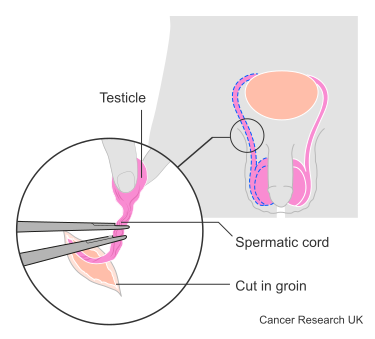
The surgeon makes a small cut in your groin. They cut the spermatic cord to remove the testicles.
After removing the testicles, they may put in fake testicles (). The surgeon will discuss this with you before the operation. They will do their best to match the testicles. But sometimes the prostheses may look slightly different.
You may be able to have a smaller operation to remove only the inner part of your testes. This is a subcapsular orchidectomy. You don’t need a prosthesis after this operation but your scrotum will be smaller after the operation.
Find out what happens on the day of your operation
You can usually go home later that day but might need to stay in hospital overnight.
You have stitches that are dissolvable. These can take about 3 to 4 weeks to dissolve. And you usually have a dressing over the wound. Your nurse will explain how to look after the wound before you go home. They will tell you when to remove the dressing and when you can shower.
Your groin and scrotum may be uncomfortable for a week or so. You might need to take mild painkillers.
Most people can go back to normal activities, including work, after 2 weeks. But this depends on the type of work you do. You should avoid heavy lifting and strenuous exercise for a few weeks.
Speak to your doctor or specialist nurse about starting normal sexual activity again. This is usually when your wound is healed and you feel comfortable.
Your doctors will make sure the benefits of having the surgery outweigh the possible risks. Risks of any operation include:
pain and discomfort
bleeding
infection
Risks of having surgery to remove both testicles include:
hot flushes
difficulty getting an erection
This surgery may also affect your ability to have children. Talk to your doctor if having children is important. They usually suggest sperm banking before having surgery.
Possible changes to your sex drive and becoming infertile can be difficult to come to terms with. Talking to someone about this could help. This could be a close friend or a professional.
Find out more about sex and relationships and prostate cancer
You will have a follow up appointment 6 weeks or so after your surgery. At the appointment your doctor:
examines you
asks you about how you are and if you have had any problems
It is also your chance to ask any questions. Write down any questions you have before your appointment to help you remember what you want to ask. Taking someone with you can help you to remember what the doctor says.
After your first check up you will continue to have follow up to monitor your cancer. How often you have checkups varies. Ask your doctor how often you need to have checkups and what they will involve.
Last reviewed: 04 Jul 2025
Next review due: 04 Jul 2028
Surgery to remove your prostate gland is called radical prostatectomy. Most people in the UK have robotic assisted keyhole surgery.
Hormone therapy is a possible treatment for prostate cancer. You might have it with radiotherapy for prostate cancer that hasn't spread to distant body parts.
Your specialist doctor discusses whether you need treatment, and what your treatment options are. Treatment options might include surgery or radiotherapy.
Hormone therapy for prostate cancer can affect the levels of your hormones. This can cause different side effects including hot flushes, swollen breasts, sleep disturbances and weight changes.
Prostate cancer treatments can affect your sex life in different ways. Some treatments can damage the nerves or affect hormone levels that you need to get an erection.
Prostate cancer is cancer that starts in the prostate gland. The prostate gland is found at the base of the bladder and is about the size of a walnut.

About Cancer generously supported by Dangoor Education since 2010. Learn more about Dangoor Education



Search our clinical trials database for all cancer trials and studies recruiting in the UK.

Connect with other people affected by cancer and share your experiences.

Questions about cancer? Call freephone 0808 800 40 40 from 9 to 5 - Monday to Friday. Alternatively, you can email us.
