About Cancer
There are more than 200 different types of cancer, including
A rare cancer is one that affects a small number of people. Doctors might also call a cancer rare if it starts in an unusual place in the body. Or if the cancer is an unusual type of a more common cancer.
Experts in the UK and European Union say a cancer type is rare if fewer than 6 in 100,000 people are diagnosed with it each year. For some clinical trials, a cancer is rare if doctors diagnose fewer than 2 in 100,000 people each year.
Examples of rare cancers include:
Rare cancers make up about 24 out of every 100 (about 24%) cancer cases diagnosed in the UK and European Union per year. This also includes children and young people’s cancers.
The most common cancers in the UK are:
Examples of less common cancers include:
Some people may have a rare type of one of these common or less common cancers.
Cancers can start in different types of cell. For example, bowel cancer can start in glandular cells that produce . Doctors call this type of cancer adenocarcinoma. Adenocarcinoma is the most common type of bowel cancer. But bowel cancer can also start in . Bowel cancer that starts in squamous cells is a rare type of cancer.
Find out more about the types of cell cancer can start in
Some common types of cancer can also start in unusual places in the body. For example, cutaneous T cell lymphoma is a rare type of non-Hodgkin lymphoma that starts in the skin.
Doctors treat some rare cancers in the same way as the more common cancers of that type. But other rare types get treated differently. For example, rectal cancer is a type of bowel cancer. Doctors treat squamous cell cancer of the rectum in a different way to adenocarcinoma of the rectum.
It can take longer to diagnose a rare cancer. This can be because:
the symptoms might be unusual and less recognisable than for more common cancers
more tests may be needed to find out what type of cancer it is
some tests may need to be done at other hospitals
your doctor may need to get advice from doctors in other hospitals
Your specialist doctor asks you to have tests to first work out whether you have cancer or not. If you do, they can then find out exactly what type it is. This may mean you need more tests.
Doctors diagnose most types of cancer by taking a sample of tissue (biopsy) from where they think the cancer is. For example, if they think the cancer is in your breast they take a biopsy from your breast. If they think the cancer is in your blood, they normally ask for a sample of your blood to be taken. Your doctor sends the sample to a specialist doctor called a pathologist. They test the sample in the laboratory to see if it contains cancer cells.
The pathologist might need to do a number of extra tests on your biopsy or blood sample. Or they might need to send the sample to a specialist laboratory to be tested. Your doctor can explain what these tests are and what they are for. Depending on the test, it could take a few days and sometimes weeks to do the test and get the results. This means it can take longer to get a diagnosis.
For very rare types of cancer your specialist doctor may need to get advice from experts about your symptoms and test results. These might be doctors in other parts of the UK or in other countries. Your doctor might not be able to tell you much until they have spoken to these experts. You might find this worrying and frustrating as you do not know what you are dealing with. Sometimes you might feel like your doctor is hiding something. But it is all part of trying to work out what they can do to help you.
Once your doctor knows what type of cancer you have, they talk with you about what happens next. They may refer you to a specialist cancer centre for treatment. Or they may need time to research and speak with other doctors who have treated people with this type of rare cancer.
You are likely to have a lot of questions for your doctor. It might help to write them down so you don't forget. It’s also a good idea to take someone with you to the appointment such as your partner, family member or a close friend. They can support you and help you remember what the doctor has said.
Your doctor might not be able to answer all your questions straight away. They may need the results of some tests first or want to ask other doctors for advice.
When you first see your doctor:
When will I know if I have cancer?
What tests do I need?
How long before I get the results?
How will I be told the results?
Do you have someone I can contact while I am waiting for the results to come back?
What type of cancer do I have?
Where is the cancer?
Are there any signs that the cancer has spread?
What happens if the cancer has spread?
Do I need any other tests?
What chance do I have of surviving this cancer?
How rare is this cancer?
Should I get a second opinion? How do I get the second opinion?
Will the treatment be different from the commonest type of this cancer?
When will I start?
what are the expected side effects?
What if I don’t have treatment?
How will we know the treatment is working?
How long is the treatment?
Where do I go for treatment?
How am I likely to feel?
Will I be able to work or look after my children during treatment?
When am I likely to see you again?
What practical and emotional support can I get?
Is there any financial help available to me?
Are there support groups, or anyone else I can talk to about this type of cancer?
It’s a worrying time for many people and we want to be there for you whenever - and wherever - you need us. Cancer Chat is our fully moderated forum. It is a safe place to talk with others affected by cancer, share experiences, and get support. Cancer Chat is free to join and available 24 hours a day.
Some people may want to ask about a second opinion before deciding on treatment. Speak to your specialist doctor about this. It is likely they will have already discussed your case with other specialist health professionals to get their opinion on the best treatment plan for you.
If you would still like another opinion, ask your specialist to refer you to another doctor who looks after people with this type of cancer. It’s better to arrange this through your specialist as they can send the second doctor all your notes and test results.
Do remember that a second opinion does not necessarily mean that the second doctor will take over your care. Your treatment will usually still be managed by your original specialist.
Find out more about getting a second opinion
A team of doctors and other health professionals discuss the best treatment and care for you. They are called a multidisciplinary team (MDT). Your doctor will then talk with you about the treatment they recommend. The treatment you have depends on several factors including:
where the cancer is
how big it is and whether it has spread (the stage)
how abnormal the cells look under a microscope (the grade)
your general health and level of fitness
Your doctor will discuss the treatment options, their benefits and possible side effects with you.
Some of the treatments for rare cancers include:
or
having treatment as part of a
You may have more than one of these treatments. Your doctor and specialist nurse are the best people to speak to about your particular cancer.
Find out more about the different treatment types
There are things you can do to help you feel more in control of your physical and mental health during this time.
Research shows that focusing on certain lifestyle changes in the time you have before starting treatment can:
help you cope better with side effects
improve your long term health
In the hospital, preparing for treatment is also called prehabilitation or prehab.
Find out more about prehabilitation
Researchers in the UK and around the world are looking for better ways to diagnose and treat rare cancers. They do this by asking people to take part in clinical trials. But it can be more difficult to find a clinical trial for a rare cancer than it is for more common cancers. Challenges in research for rare cancer
There might be fewer clinical trials for rare types of cancer than for more common cancers. There can be a number of reasons for this including:
there are fewer people with a specific rare cancer to take part
the people who can take part may not live in the same country – this can make the trial difficult to organise and run
only a small number of hospitals may take part in the trial
if someone is diagnosed later with a rare cancer, they may not be able to take part in a clinical trial
less money is made available for researching rare cancers
Getting enough people to take part is very important to the success of a trial. The results wouldn't be powerful enough if the trial involves too few people. For example, results wouldn’t be able to prove whether one type of treatment is better than another.
Cancer Research UK has contributed to several advances for people with rare cancers. We ran some of the first trials for people with:
a type of eye cancer called uveal melanoma
We continue to fund and research clinical trials into rare cancers.
Find out more about our research into rare cancers
Genomics means to study the DNA in all of a person's . DNA is the code that tells cells how to behave. And a complete set of genes is called a genome. Scientists link cancer to changes in the genome.
Our genes contain DNA. And our chromosomes are made of genes.
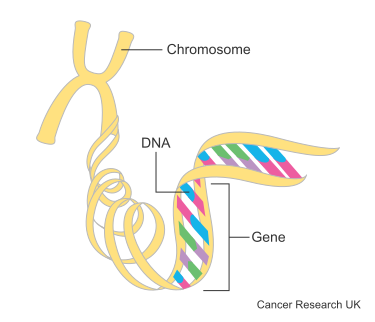
Chromosomes are found in the middle (nucleus) of every cell in the human body. A set of chromosomes is inherited from each parent.
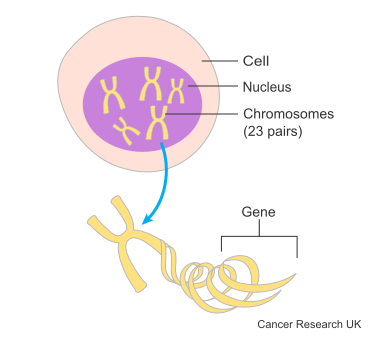
Researchers look at the DNA in a person’s cancer cells, as well as their healthy cells to see if there is anything different. They hope these differences will tell them which treatments are best for that cancer type.
The Department of Health and Social Care is running the 100,000 Genomes project. It aims to understand what role genes play in health and disease. An area of focus within this project is cancer, including rare cancer.
Read more about the 100,000 Genomes project
There are other research studies looking at rare cancers and those that affect people at a young age to find out more about cancer genetics and if they can develop further tests.
The Rare Cancers Working Group (RCWG) is a partnership between:
a variety of different research organisations
professional societies such as the European Oncology Nursing Society - oncology means the study of cancer
charities
rare cancer networks
patient groups
healthcare and education providers
This working group was set up to raise the awareness of rare cancers. Their work includes improving:
the quality of clinical trials into rare cancers
access to treatments for rare cancers
how healthcare is organised for people with rare cancers
information on rare cancers
the education of healthcare professions about rare cancers
Find out more about the Rare Cancers Working Group
Speak to your doctor or specialist nurse if you are interested in taking part in a clinical trial. If they have particular expertise in your type of cancer, they may be part of a research group. Even if they are not, they might be able to find out if there are any trials you can take part in.
You can also look at our searchable database for rare cancer trials in the UK. You can choose from the list of cancer types or type the name of the cancer into the search box.
Talk to your specialist if you see a trial you think you might be able to take part in.
Many people can feel isolated if they have a rare type of cancer. It might take longer to get a diagnosis and to start treatment which can make you anxious. And you may not know anyone else with this type of cancer.
You might need to go to a specialist hospital for treatment. This could involve travelling further than your local hospital. But it can be reassuring to know that a specialist team is caring for you. You are also more likely to meet someone else with your cancer type.
There are things you can do, people who can help and ways to cope with a diagnosis of cancer. But you may need to give yourself time before you find out more. When you are ready, you can ask your doctor or specialist nurse what help and support are available to you. They can also tell you about support available for your family and friends.
It can be hard to find information about a rare type of cancer. Ask your doctor or specialist nurse if they know of any suitable information. You could ask about the best term to use if you want to look for information online.
You can also check if we have information about your cancer type on our website. Search by putting the name in the search box at the top of each page. Or look for your cancer type on our A to Z list. You can then read about the different types of that cancer.
This is an alliance of over 100 organisations working to address inequality in funding for rare cancers and improving outcomes for patients.
Email : info@cancer52.org.uk
RareCan allows people with rare cancer types to share their information with researchers. By doing this they hope to speed up the finding of new treatments and ways to diagnose people with rare cancer. RareCan also allows people to connect with other people who have a rare cancer.
EURACAN connects patients who have rare adult to expert health care centres across Europe.
This section has been written, reviewed and updated by Cancer Research UK’s Patient Information Web Team. Thanks to the expert medical professionals and people affected by cancer who have helped to review this information.
Natalie Adams (Rarer Cancer Specialist Nurse)
Our lay reviewers
Last reviewed: 10 Oct 2025
Next review due: 10 Oct 2028
Search for the cancer type you want to find out about. Each section has detailed information about symptoms, diagnosis, treatment, research and coping with cancer.
Treatments can include surgery, radiotherapy and drug treatments (such as chemotherapy, hormone therapy or targeted cancer drugs). Find out about treatments and how to cope with side effects.
Find out about possible causes of cancer, how cancer starts and grows, tests to diagnose it, and general information about treatments.
Learn more about Cancer Research UK’s research into rare cancers. Hear stories about our scientists and people whose lives have been changed by our research.
Coping with cancer can be difficult. There is help and support available. Find out about the emotional, physical and practical effects of cancer and how to manage them.
Our clinical trials aim to find out if a new treatment or procedure is safe, is better than the current treatment or helps you feel better.

About Cancer generously supported by Dangoor Education since 2010. Learn more about Dangoor Education



Search our clinical trials database for all cancer trials and studies recruiting in the UK.

Connect with other people affected by cancer and share your experiences.

Questions about cancer? Call freephone 0808 800 40 40 from 9 to 5 - Monday to Friday. Alternatively, you can email us.
