Tests and scans
Blood tests can:
check your general health, including how well your liver and kidneys are working
check numbers of
help diagnose cancer and other conditions
Your blood sample is sent to the laboratory for analysis. This shows the different types of cells, chemicals and proteins in the blood.
You can eat and drink normally before most blood tests. For fasting blood tests you need to stop eating and drinking beforehand. Your doctor will tell you for how long.
You usually have a blood test taken at the GP surgery or hospital. It usually takes about 5 to 10 minutes.
You sit or lie down to have the test.
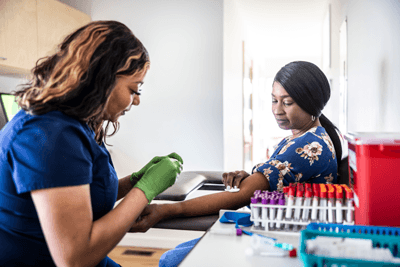
A doctor, nurse or phlebotomist (person specialised in taking blood) chooses the best vein to use. This is usually from your arm or hand. Let them know if you are afraid of needles, get unwell with the sight of blood or are allergic to plasters or latex.
They put a tight band (tourniquet) around your arm above the area where they take the sample. You may need to clench your fist to make it easier to find a vein.
They clean your skin and then put a small needle into your vein. Next, they attach a small bottle or syringe to the needle to draw out some blood. They might fill several small bottles depending on how many different blood tests you have.
Once they have all the samples, they release the band around your arm. They then take the needle out and put pressure on the area with a cotton wool ball or small piece of gauze for a few minutes. This helps to stop bleeding and bruising.
You can look away when they’re taking the blood if you prefer. Tell your doctor, nurse or phlebotomist if you feel unwell.
If you have a or a , your nurse and phlebotomist can often use this to take blood. This means you don’t need to have blood taken from your arm using a needle.
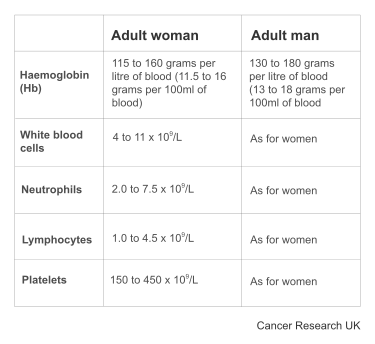
A full blood count (FBC) measures the number of red cells, white cells and platelets in your blood.
Red cells carry oxygen around our bodies. Haemoglobin is the part of the cell that carries oxygen. If you have a low red cell count, your doctor might say you’re anaemic (pronounced a-nee-mic). This can make you feel tired, short of breath and dizzy.
White cells fight infections. There are several different types of white cells, including neutrophils and lymphocytes.
Platelets help clot the blood, for example after a cut. Symptoms of a low platelet count include abnormal bleeding, such as bleeding gums and nosebleeds.
There is a range of normal for blood counts. The range of figures quoted as normal varies slightly between laboratories and also differs between men and women.
These blood tests show how well your kidneys are working. Waste chemicals called urea and creatinine are produced by the body. Our kidneys remove them from our blood and get rid of them in our pee (urine).
are substances such as sodium, potassium, chloride and bicarbonate.
Liver function tests (LFTs) check how well your liver is working. LFTs look for levels of enzymes and proteins made by the liver or which are cleared by the liver. They include:
alanine aminotransferase (ALT)
aspartate aminotransferase (AST)
alkaline phosphatase (ALP)
gamma-glutamyl transferase (Gamma GT)
They might be raised if you have a blockage in your liver or bile duct, or if you drink a lot of alcohol.
LFTs also look at the amount of bilirubin in the blood, this is a chemical in . Bilirubin can be raised if you have a problem with your liver or gallbladder. Bilirubin can cause yellowing of your skin and eyes (jaundice).
LFTs also measure albumin. This is a protein in the blood that can be low when you have some types of cancer. You can also have low albumin if you’ve been eating small amounts and are malnourished.
Tumour markers are substances that might be raised if there is a cancer. They’re usually proteins. They can be found in the blood, urine or body tissues. You might also hear them called biomarkers or molecular markers.
Doctors might use tumour marker tests together with the results of other tests you have to:
help diagnose a cancer
help plan treatment
monitor how well your cancer treatment is working
check if the cancer has come back
Some tumour markers are only made by one type of cancer. Others can be made by several types. Some tumour markers are found in non cancerous conditions as well as cancer. And some cancers don’t have any tumour markers.
Examples of tumour markers include (PSA) and .
For those cancers that may have raised tumour markers, you can find out more in the tests section for that cancer type.
Go to our A to Z list of cancer types
Depending on your cancer type, you might have other blood tests. For example to check for viruses, hormone levels and changes to genes. Your doctor or nurse will talk to you about the different blood tests you will have. You can read more about the blood tests you need in the tests section for your cancer type.
Blood sampling (phlebotomy) is a safe test. There is a possibility of:
bleeding and bruising - pressing hard when the needle is removed can help to stop it
pain - this is normally mild and can last for a few minutes
swelling (oedema) - ask your nurse, doctor or phlebotomist to avoid an arm that is swollen or has a risk of swelling
feeling faint or fainting - tell the person doing your blood test if you're feeling lightheaded or dizzy at any time
infection - this is very rare
Ask the phlebotomist, doctor or nurse when and how you will get your results. Some results might be available very quickly, such as a full blood count and kidney and liver function tests. Other tests might take several weeks.
We have more information on tests, treatment and support if you have been diagnosed with cancer.
Last reviewed: 13 Jun 2025
Next review due: 13 Jun 2028
Cancer is the name given to a collection of related diseases. Cancer starts when cells change abnormally.
Search for the cancer type you want to find out about. Each section has detailed information about symptoms, diagnosis, treatment, research and coping with cancer.
Find out about tests to diagnose cancer and monitor it during and after treatment, including what each test can show, how you have it and how to prepare.
Researchers are looking at the Galleri blood test as a way of picking up cancer at an early stage.

About Cancer generously supported by Dangoor Education since 2010. Learn more about Dangoor Education



Search our clinical trials database for all cancer trials and studies recruiting in the UK.

Connect with other people affected by cancer and share your experiences.

Questions about cancer? Call freephone 0808 800 40 40 from 9 to 5 - Monday to Friday. Alternatively, you can email us.
