Tests and scans
There are different types of breast biopsy. The type of biopsy you have depends on a number of factors such as:
how big the abnormal area is
where it is
Before having a biopsy, you have scans such as a and breast . Your doctor looks at the results of the scans and decides on the best type of biopsy for you. You might have a:
needle biopsy, this is also called core needle biopsy
vacuum assisted biopsy
fine needle aspiration
punch biopsy
Sometimes it can be difficult to take a biopsy from the abnormal area. If this happens, your doctor might suggest you have a wire guided biopsy. This is a surgical biopsy.
Go to our information about breast cancer
You usually have a biopsy in the outpatient department. Or you might have it in a one stop breast clinic after other tests, such as a mammogram or breast ultrasound scan.
You have a wire guided excision biopsy in the operating theatre.
You can usually eat and drink normally before your biopsy. Take your medicines as normal. But if you are taking any blood thinning medicines you might need to stop them before the test. Your doctor or nurse will tell you when to stop.
If you are having a wire guided excision biopsy you usually have it under . You need to stop eating and drinking for a few hours before the test. You usually can’t eat up to 6 hours beforehand and you can have water for up to 2 hours beforehand.
Your doctor or nurse will give you information about the test and may ask you to sign a consent form. This is a good time to ask any questions that you have. What happens during the biopsy depends on the type of biopsy you are having.
When you are in the biopsy room, a staff member will ask you to take off your upper clothing, including your bra. You usually put on a hospital gown and lie on a couch. Your doctor then cleans the breast area.
Having the samples of tissue taken only takes a few minutes, but you will be with the doctor for longer. Part of this time is making sure you understand the procedure and are comfortable.
A needle biopsy uses a hollow needle to take a few breast samples. The needle has a special cutting tool attached to a handle. This is the most common way of having a breast biopsy.
Your doctor usually does a mammogram or ultrasound scan of your breast. This finds the right place to take the sample. They then use a to numb the area. This might sting a little.
Your doctor then makes a very small cut in the skin. They gently put a hollow needle through the cut into your breast and take a sample of breast tissue. You usually have more than one sample taken. You might hear the needle click as each sample is taken.
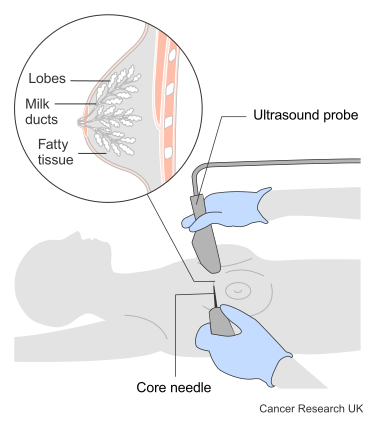
You will feel some pressure on the breast, and it can sometimes feel uncomfortable, but it isn't usually painful. Do let the doctor know if it is painful, you may need more local anaesthetic.
Your doctor removes the needle once the sample is taken. They may put a small metal clip if all the abnormal area is removed. They then put pressure on your breast for a few minutes after the test. This is to prevent bleeding and bruising.
You have a dressing over the site. This is usually a paper stitch with a waterproof dressing over the top.
A vacuum assisted biopsy is also called:
a mammotome biopsy
a minimally invasive breast biopsy (MIBB)
a vacuum core biopsy
Your doctor uses a special needle attached to a vacuum device to remove the breast tissue. You have this under imaging guidance. This means that the doctor uses either a mammogram or ultrasound scan to find the exact area to biopsy. You need to stay completely still and not change your position.
Your doctor uses a local anaesthetic to numb the skin. This might sting a little. When the area is numb, they make a very small cut in the skin. Next, they put a hollow needle with a vacuum suction through the cut. You may have another mammogram or ultrasound scan to check the position of the needle.
Once in position, the doctor moves the needle to remove abnormal tissue from the area. The needle makes a noise and you will feel it vibrating. This isn’t usually painful but you might have some discomfort for a short time. Tell your doctor if you find it painful.
After the biopsy, the doctor might put a small metal clip to mark the area. The clip is made of titanium and stays in your breast. It will not cause you any harm. This means that the area is easily found again and seen on all your future breast ultrasound scans or mammograms.
The doctor or a nurse puts pressure on your breast for 5 to 10 minutes after the test. This is to prevent bleeding or bruising. You have a dressing put over the site, this is usually a paper stitch with a waterproof dressing. Or you may have a pressure dressing if there is a risk that the biopsy site may bleed. Your nurse will show you how to look after this.
A fine needle aspiration (FNA) is a way of taking a sample of cells from the breast tissue. It is also called fine needle aspiration cytology (FNAC).
First your doctor does an ultrasound scan of your breast. This finds the right place to take the sample. Then they gently put a small needle into your breast and take a sample of fluid and cells. You will feel some pressure on the breast, but it shouldn’t be too painful. Let your doctor know if it’s painful for you.
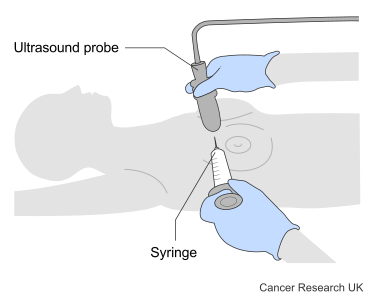
After taking the sample, your doctor removes the needle. They put a small plaster over the biopsy area.
A punch biopsy uses a small cutting device like a tiny apple corer to remove a sample of breast tissue. The sample includes layers of breast tissue just under the skin.
Your doctor uses a local anaesthetic to numb the skin, which might sting a little. When the area is numb, they gently take a small area of skin. You feel some pressure on the breast, but it shouldn’t be too painful. Do let the doctor know if it’s painful. You may need more local anaesthetic.
After the doctor takes the sample, they put pressure on your breast for a few minutes to prevent bleeding or bruising. You have a dressing over the biopsy site, this is usually a paper stitch with a waterproof dressing over the top.
A wire guided excision biopsy means putting a thin wire into the breast to show the exact area to remove.
You might have this type of biopsy if your mammogram or breast ultrasound scan has shown an abnormal area, but your doctor can’t feel anything when they examine you. The abnormal area might look more dense than usual, or it might contain calcium spots. These are called breast calcifications.
You might have this biopsy if it is difficult to do other types of biopsies such as a needle biopsy.
You have a wire guided biopsy in 2 stages:
the wire is put in place using a local anaesthetic in the radiology department or breast clinic
later that same day, or the following day, you have surgery with a general anaesthetic to remove the area
You can usually get dressed and go home or back to work straight afterwards if you like. But this depends on the type of biopsy you have had. Try not to do too much for the rest of the day. After a vacuum assisted biopsy, you should avoid heavy lifting for 48 hours.
You can take paracetamol if your breast is sore or tender. Your doctor or nurse will let you know how to look after your dressing. You can have a shower as normal if you have a waterproof dressing. Wearing a non wired soft bra may be more comfortable.
After a wire guided biopsy, you wake up in the recovery area of the operating theatre. Your nurse will take you back to the ward once you are fully awake. You can usually get dressed and go home that evening. Don’t drive because you might be drowsy from the anaesthetic. Arrange for someone to come and pick you up from the hospital and take you home.
You should get your results within 1 or 2 weeks at a follow up appointment, but it may take longer.
Waiting for test results can be a very worrying time. You might have contact details for a specialist nurse who you can contact for information if you need to. It can help to talk to a close friend or relative about how you feel.
Contact the doctor who arranged the test if you haven’t heard anything after a couple of weeks.
A breast biopsy is a safe test, but your nurse will tell you who to contact if you have any problems afterwards. Your doctor will make sure the benefits of having a biopsy outweigh these possible risks.
Some of the possible risks include:
You might see some bruising in the area and this is normal. It will go after a week or two.
It’s rare to have bleeding after your biopsy. Your doctor or nurse will give you advice on what to do if you have bleeding.
Some people have some mild swelling after the test. This is uncommon but it may happen if the biopsy was difficult to do. Let your doctor know if the area is swollen or very painful.
Your doctor or nurse will let you know how to look after your biopsy site, to keep it clean and dry. Contact your healthcare team if the area becomes red or hot, you have pain rather than discomfort or if the pain is getting worse.
If you are having a wire guided biopsy, the wire may move between the time it’s put in and surgery, but this is rare.
Air can collect in the space around the lung and make it collapse, but this is very rare. Contact a doctor if you become short of breath or have chest pain.
If you have a biopsy that shows that you have breast cancer, you might have more tests to work out where and how big the cancer is. This is called staging the cancer.
Last reviewed: 15 May 2023
Next review due: 15 May 2026
You have a number of tests to check for breast cancer. This includes a breast examination, a mammogram, a biopsy and scans.
Symptoms of breast cancer include a lump or thickening in the breast. Find out more about this and other possible symptoms and when you should see your GP.
Get information about how doctors stage and grade breast cancer. In the UK, doctors use the TNM system to stage breast cancer. You may also be told about the number staging system.
Treatment for breast cancer depends on a number of factors. Find out about breast cancer treatments, where and how you have them, and how to cope with possible side effects.
You may find it difficult coping with a diagnosis of breast cancer both practically and emotionally. Find out about the things you can do and who can help you cope.
Find out about breast cancer, including symptoms, diagnosis, treatment, survival, and how to cope with the effects on your life and relationships.

About Cancer generously supported by Dangoor Education since 2010. Learn more about Dangoor Education



Search our clinical trials database for all cancer trials and studies recruiting in the UK.

Connect with other people affected by cancer and share your experiences.

Questions about cancer? Call freephone 0808 800 40 40 from 9 to 5 - Monday to Friday. Alternatively, you can email us.
