Tests and scans
A CT scan is a test that uses x-rays and a computer to create detailed pictures of the inside of your body. It takes pictures from different angles. The computer puts them together to make a 3 dimensional (3D) image.
CT (or CAT) stands for computed (axial) tomography.
You usually have a CT scan in the x-ray or radiology department as an outpatient. A operates the scanner and looks after you while you have your scan. The whole appointment can take about an hour and a half, depending on which part of your body they are scanning.
You might have a CT scan combined with another test such as a PET scan (PET-CT scan). Or you might have a different type of CT scan depending on what information your doctor wants to know. For example, a CT urogram is a different type of CT scan. This type looks at the .
Read more about these scans on our A-Z list of tests and scans
You might have a CT scan:
to diagnose a range of conditions including cancer
to help work out where the cancer is, how close it is to nearby organs and how big it is - this can help your doctors decide whether you need further tests or what treatment you need
to check how well treatment is working
as part of your follow up after treatment
Some CT scans need special preparation beforehand. You should follow the information given by your healthcare team or in your appointment letter, as some hospitals may have slightly different instructions.
For most scans, you have a drink or an injection of or both. This is a dye that shows up body tissues more clearly on the scan.
You may be asked to stop eating and drinking for 2 to 4 hours before your scan if you have a contrast medium. Your scan team will tell you exactly how long you need to do this for. Let them know if not eating is a problem for you.
You have the injection through a small thin tube called a cannula into your arm. The cannula stays in place until after your scan. This is in case you have any problems, such as an allergic reaction after having the injection.
You should take your regular medication unless you are told otherwise.
It is important that you call the scanning staff before your scan if you are pregnant or think you might be pregnant.
You might have blood tests before your CT scan. This is to make sure your kidneys are working well. There is a small risk that the contrast medium can affect your kidneys.
If you are having a CT scan of your abdomen, you might need to:
drink a liquid contrast medium some time before the scan
drink more of the liquid contrast or water in the x-ray department
stop eating or drinking a few hours before your scan
You usually have the contrast medium by injection and also as a drink. This helps to show up the more clearly in the scan.
You may need to stop eating and drinking beforehand. You might have an injection of the contrast medium during the scan. This is to help show up the tissues close to the area containing cancer. For example, if your doctor wants to know if the cancer is affecting your blood vessels. It may help to show whether cancer can be removed with surgery or not.
The pelvis is the lower cavity of the body in the area between the hip bones. It contains the pelvic organs, including the bladder, lower bowel and reproductive organs. If you are having a CT scan of the pelvis, you might need to:
stop eating or drinking for some time before the scan
have an injection of contrast medium
Occasionally, for a scan, you might have an enema of contrast medium. This helps the outline of the bowel show up more on the scan. Your radiographer will give you more information about this.
For some brain scans, you might have an injection of the contrast medium dye. This is to make the scan clearer.
You might have a very detailed scan of the bowel called a CT colonography or virtual colonoscopy.
For this test you need an empty bowel. You'll have strong laxatives and follow a special diet about 2 days before the test. You might also have a special liquid to drink called gastrorgrafin. It's a type of dye but also acts like a laxative. Your doctor or nurse will tell you more about this.
Find out about having a CT colonography
When you arrive you fill out a checklist or questionnaire with the radiographer. They also explain what to expect during the CT scan. They ask you questions about your medical history and any allergies. It's a good time to ask any questions you may have.
Once you're happy to proceed they usually give you a hospital gown to change into.
Before the scan, you remove any jewellery or metal objects in the area being scanned, such as a bra with metal fastenings or hair clips. This is because metal can interfere with the images produced by the scanner.
When it’s time to start, your radiographer takes you into the scanning room.
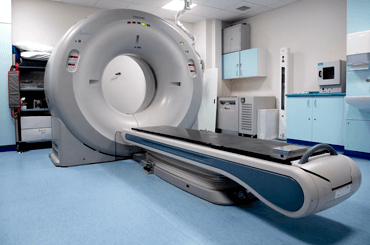
A CT scanning machine is large and shaped like a doughnut.
You might have an injection of contrast medium through the cannula. You may:
feel hot and flushed for a minute or two
have a metallic taste in your mouth
feel sick
feel like you’re passing urine but you aren’t – this feeling is common and passes quickly
Tell your radiographer if you feel anxious or claustrophobic about having a scan.
You usually lie down on the machine couch on your back. Once you’re in the right position, your radiographer leaves the room. They can see you on a TV screen or through a window from the control room. You can talk to each other through an intercom.
The couch slowly slides backwards and forwards through the hole of the scanner. The machine takes pictures as you move through it.
The scan is painless, but it can be uncomfortable because you have to stay still. Tell your radiographer if you’re getting stiff and need to move.
You’ll hear a whirring noise from the scanner.
Your radiographer might ask you to hold your breath at times.
The scan usually lasts between 5 and 30 minutes. This depends on what part of the body is being scanned. But you are often in the department for longer.
When the scan is over, your radiographer comes back into the room and lowers the couch so you can get up.
This 2 minute video shows what happens when you have a CT scan.
You stay in the department for about 15 to 30 minutes if you had an injection of the dye. This is in case it makes you feel unwell, which is rare.
Your radiographer removes the cannula from your arm before you go home.
You should be able to go home, back to work or the ward soon afterwards. You can eat and drink normally.
A CT scan is a safe test for most people but like all medical tests it has some possible risks. Your doctor and radiographer make sure the benefits of having the test outweigh these risks.
Some of the possible risks include:
Rarely, people have an allergic reaction to the contrast medium. This most often starts with weakness, sweating and difficulty breathing. Your radiographer will ask if you have any allergies before you have the contrast medium. Tell them immediately if you feel unwell after having it.
You might get a small bruise around the area where they put the needle in for the cannula.
There's a risk that the contrast medium will leak outside the vein. This can cause swelling and pain in your hand or arm but it’s rare.
There is a small risk that the contrast medium can affect your kidneys. Your radiographer checks your most recent blood test results before your scan. This is to make sure your kidneys are working well. You may be able to have the scan without contrast medium if you have kidney problems.
Pregnant women should only have CT scans in emergencies. Contact the department as soon as you can before the scan if you are pregnant or think that you might be.
Exposure to radiation during a CT scan can slightly increase your risk of developing cancer in the future. Talk to your doctor if this worries you.
Read about ionising radiation and cancer risk
You should get your CT scan results within 1 or 2 weeks.
Ask your doctor, radiographer or nurse how long it will take to get them. Contact the doctor who arranged the test if you haven’t heard anything after a couple of weeks.
Waiting for test results can be a worrying time. You might have contact details for a specialist nurse. You can get in touch with them for information and support if you need to. It may help to talk to a close friend or relative about how you feel.
We have made the following translated videos with Thames Valley Cancer Alliance.
This video shows how you have a CT scan. It is around 2 and a half minutes long. To turn off YouTube's auto-dubbing on the video below, go to settings (the cog) and change the audio track to 'Polish original'.
This video showing how you have a CT scan is 3 minutes long.
We have more information on tests, treatment and support if you have been diagnosed with cancer.
Last reviewed: 06 May 2025
Next review due: 06 May 2028
Search for the cancer type you want to find out about. Each section has detailed information about symptoms, diagnosis, treatment, research and coping with cancer.
Find out about tests to diagnose cancer and monitor it during and after treatment, including what each test can show, how you have it and how to prepare.
A PET-CT scan combines a CT scan and a PET scan. It gives detailed information about your cancer.

About Cancer generously supported by Dangoor Education since 2010. Learn more about Dangoor Education



Search our clinical trials database for all cancer trials and studies recruiting in the UK.

Connect with other people affected by cancer and share your experiences.

Questions about cancer? Call freephone 0808 800 40 40 from 9 to 5 - Monday to Friday. Alternatively, you can email us.
