Tests and scans
To have the test, a trained healthcare professional puts small sticky pads on your chest, arms and legs. These sticky pads are called electrodes. Wires connect these to an ECG recording machine. These wires are called ECG leads. There are usually 10 small sticky pads and wires in total. The different wires look at the heart activity from different places.
The ECG machine shows your heartbeat as an electrical trace on a screen. Your doctor can see the heartbeat and rhythm on a TV screen or print it out on paper.
Below is a picture of an ECG printed on paper.
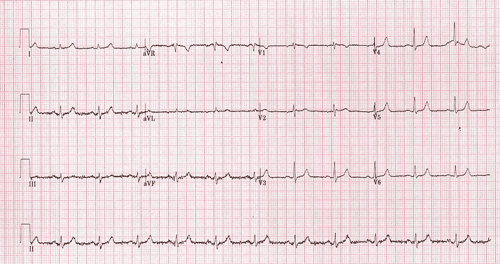
You might have an ECG in a clinic, on a ward or in a GP surgery. It takes about 5 minutes. The electrodes and wires must be in the correct place, so it can sometimes take a little longer. A trained healthcare assistant, nurse or doctor does the ECG for you.
Some people need to have an ECG machine on for monitoring for a day or longer. This means they have a portable machine that they can carry around. This is an ambulatory ECG machine. This test has fewer ECG sticky pads and leads. It can show changes in your heart that might happen at different times of the day.
A healthcare professional will show you how to look after the machine. They will also explain how long you need this for and when to return the machine. A specialist will then look at the results.
You are not able to have a bath or shower when you are wearing your portable ECG machine.
You might have an ECG:
before and during some cancer treatments that may affect your heart. This is so your doctor can check for any changes
if you become unwell during cancer treatment
before or during an operation or test that may affect the heart
if you have a heart condition that needs monitoring
if you are taking part in a clinical trial
There is no special preparation before an ECG. The person doing the ECG will explain what will happen. You can ask any questions you may have about the test.
You usually remove or loosen some of your clothes on the top half of your body. You may need to remove your shoes, socks or bra.
You lie on a couch, flat or slightly upright. If you have a lot of chest hair this may be shaved. These preparations allow the sticky pads to make good contact with the skin. The pads need to be in certain positions. It may take a few minutes to get the pads and ECG leads in the right places.
You can have a chaperone in the room while you have your ECG. A chaperone is another staff member from the clinic. It’s up to you whether you decide to have one or not. Ask for a chaperone if this is what you want and it hasn’t been offered.
You have the test in a private and quiet area. This may be in a separate room or behind curtains.
The person doing the tests places the sticky pads across your chest, with one pad on each wrist and ankle. They connect the ECG leads to the sticky pads.
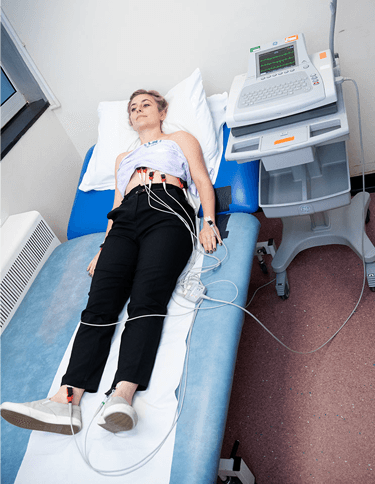
When the ECG machine is ready, they press a button to get a trace of your heart. You won’t feel anything. You should relax and lie still to make sure the test is accurate.
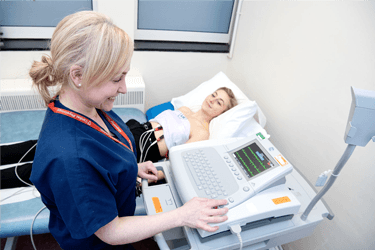
After the test the leads from the pads are unclipped. You can then remove the sticky pads.
You can get dressed and return home or to work.
You might get your results the same day or within 1 to 2 weeks. This depends on how quickly your doctor needs the results.
Ask your doctor or nurse how long it will take to get them.
An ECG is a safe test. You might have some discomfort when you remove the sticky pads.
We have more information on tests, treatment and support if you have been diagnosed with cancer.
Last reviewed: 31 Mar 2025
Next review due: 31 Mar 2028
Find out about tests to diagnose cancer and monitor it during and after treatment, including what each test can show, how you have it and how to prepare.
Find out about possible causes of cancer, how cancer starts and grows, tests to diagnose it, and general information about treatments.
Search for the cancer type you want to find out about. Each section has detailed information about symptoms, diagnosis, treatment, research and coping with cancer.

About Cancer generously supported by Dangoor Education since 2010. Learn more about Dangoor Education



Search our clinical trials database for all cancer trials and studies recruiting in the UK.

Connect with other people affected by cancer and share your experiences.

Questions about cancer? Call freephone 0808 800 40 40 from 9 to 5 - Monday to Friday. Alternatively, you can email us.
