Tests and scans
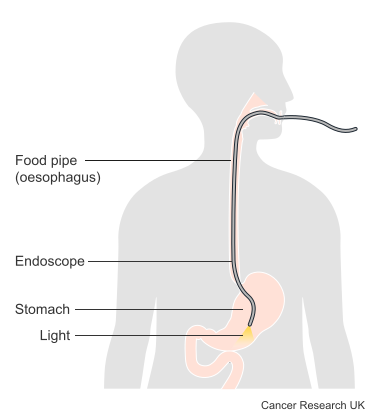
A doctor or specialist nurse (endoscopist) does the test. They use a long flexible tube which has a tiny camera and light at the end. They pass the tube through your mouth and throat into your stomach. This tube is called a gastroscope or endoscope.
You may also hear this test called an endoscopy or oesophago gastric duodenoscopy (OGD).
You usually have this test in the endoscopy department at the hospital. You may choose to have medicine to help you relax for the test and it may make you drowsy. This is called sedation. If you have sedation, a friend or family member will need to take you home and stay with you overnight.
You might have a gastroscopy to find out the cause of symptoms such as:
abnormal bleeding
indigestion or heartburn that doesn’t go away with medicines or keeps coming back
low levels of iron (iron deficiency anaemia)
difficulty or painful swallowing
losing weight without trying to
regularly feeling or being sick
having blood in your sick
blood in your poo or passing black poo
During the test your endoscopist takes samples of any abnormal looking areas. This is called a biopsy. They send the samples to the laboratory to be looked at under a microscope.
If you have you will have regular gastroscopies. This is to check for any changes to cells in the lining of your oesophagus.
Find out more about Barrett's oesophagus
You usually have written information from the endoscopy department explaining how to prepare for your gastroscopy. It’s important that you read and follow the instructions. There is usually a number to call if you have any questions.
You might have blood tests beforehand to check your blood levels and how well your blood clots.
Tell your doctor if you're taking medicines that changes how your blood clots. This includes:
warfarin or heparin
aspirin
clopidogrel
apixaban or rivaroxaban
ticagrelor
Your doctor will tell you if you need to stop taking these or any other medicines for a while before your gastroscopy. For example, you might need to stop taking some of your usual indigestion medicines before the test.
You can't eat for 6 hours before the test, but you might be able to drink sips of water up to 2 hours beforehand. The instructions may be different depending on the hospital where you have your gastroscopy.
Talk to your doctor if not eating could be a problem for you. For example, if you have diabetes.
Most people have a gastroscopy as an outpatient, which means you go home the same day. The test usually takes up to about 15 minutes. But expect to be in the hospital for several hours. This allows time to prepare for the test and any recovery afterwards.
When you arrive you will meet the reception staff and your nurse. Your nurse will ask about your medical history and any allergies you might have. They also check your blood pressure, heart rate and oxygen levels.
Your nurse or endoscopist explains the procedure and asks you to sign a consent form. This is a good time to ask any questions you might have.
Some endoscopy units may ask you to change into a hospital gown. But you can usually have the test in your own clothes. You may need to remove any head coverings while you have the test.
You may choose to have sedation for the test. This makes you drowsy. Or you may have local anaesthetic spray to numb your throat.
If you have any false teeth or wear glasses you need to remove them for the test. Your nurse puts a plastic guard in your mouth to protect your teeth from the gastroscope.
This animation shows how you have a gastroscopy. It is around two and a half minutes long. You can watch this animation in Polish or Urdu at the bottom of this page.
Your endoscopist sprays the back of your throat with local anaesthetic. This is to numb it and make it easier to swallow the tube. This may make you cough, your eyes may water and it may taste bitter.
You then lie on your left side.
It takes a few minutes for your throat to go numb. Your endoscopist passes the gastroscope into your mouth and down your throat to the . The tube is slightly bigger than a pen and will be uncomfortable but shouldn’t be painful.
They ask you to swallow as the tube goes down. They can see the images from the gastroscope on a television screen. They may put a small amount of air into the tube to help them see your oesophagus, stomach and more clearly. This might make you feel like burping.
Your endoscopist takes biopsies through the gastroscope of any abnormal areas. This isn't painful.
At the end of the test, your endoscopist gently removes the gastroscope.
You may have the local anaesthetic spray to numb your throat. You then lie down on the couch.
Your nurse puts a very small tube into a vein in your arm. This is called a cannula. They inject the sedation into the cannula. It takes a few minutes for you to become relaxed and drowsy. You are still able to follow instructions from your endoscopist and nurse.
You have oxygen through a small plastic tube with prongs that sit just inside your nostrils. They also put a clip on your finger to check your oxygen levels and heart rate.
Your endoscopist then passes the gastroscope into your mouth and down your throat to the oesophagus as explained above. They can see images on a television screen and take biopsies of any abnormal areas.
They gently remove the gastroscope at the end of the test.
They send the biopsies to the laboratory to be looked at by a .
Your nurse or endoscopist will talk to you about how the test went. They will tell you if they took any biopsies and when to expect the results.
You might have some bloating and discomfort after the gastroscopy. This usually lasts for a few hours.
If you haven’t had sedation, you can usually go home shortly after having the test. You won't be able to eat or drink until the local anaesthetic spray has worn off. This takes about an hour.
If you had sedation, you stay in the endoscopy department for an hour or two to recover. Your nurse removes the cannula before you leave.
You may not remember much (if anything) about the test. You need a friend or relative to take you home and stay overnight. For 24 hours after having sedation, you shouldn't:
drive
drink alcohol
operate heavy machinery
sign any important documents
A gastroscopy is a very safe procedure. Your nurse will tell you who to contact if you have any problems after the test. Your doctor makes sure the benefits of having a gastroscopy outweigh the possible risks.
Some of the risks include:
If you have a biopsy you may have a small amount of bleeding. This usually stops on its own. If it doesn’t you might need to go into hospital to stop the bleeding.
This is common after having a gastroscopy and lasts a few days. Contact the hospital if you have severe pain in your throat, chest or tummy (abdomen).
There is a small risk that after a biopsy the wound can become infected. If you have a temperature, feel hot and cold or shivery, or feel generally unwell, you should contact your GP.
There’s a small chance the gastroscope can damage your teeth during the test. The mouth guard helps prevent this from happening.
There’s a small risk of breathing in spit (secretions) that you would normally swallow. This is because your throat is numb or from the sedation making you sleepy. Your nurse protects your airway by suctioning away any secretions during the procedure.
Occasionally sedation can cause problems with your breathing, heart rate and blood pressure. The risks are higher in older people and those with lung or heart problems. Your nurse closely watches you for any problems during the test, so they can treat it quickly.
There’s a very small risk of the gastroscope causing a tear in the lining of your oesophagus, stomach or duodenum. You might need an operation to repair this.
You might get some results before you go home. It takes a little longer for your biopsy results. You should get your biopsy results within 1 to 2 weeks, but it may take longer. The specialist doctor at the hospital might give you your results. Or you might see your GP.
Contact the doctor who arranged the test if you haven’t heard anything after a couple of weeks.
Waiting for test results can be a very worrying time. You might have contact details for a specialist nurse. You can get in touch with them for information and support if you need to. It may help to talk to a close friend or relative about how you feel.
We have made the following translated videos with Thames Valley Cancer Alliance.
This animation shows how you have a gastroscopy. It is less than 3 minutes long.
This animation showing how you have a gastroscopy is around 3 minutes long.
We have more information on tests, treatment and support if you have been diagnosed with cancer.
Last reviewed: 30 Jun 2025
Next review due: 30 Jun 2028
Find out about tests to diagnose cancer and monitor it during and after treatment, including what each test can show, how you have it and how to prepare.
An endoscopy is a test that looks inside the body, fin out why you might have it.
Oesophageal cancer starts in the food pipe, also known as your oesophagus or gullet. The oesophagus is the tube that carries food from your mouth to your stomach.
Stomach cancer is cancer that starts anywhere inside the stomach or the stomach wall. It’s also called gastric cancer.
Small bowel cancer starts in the cells of the small bowel. This is also called the small intestine. Find out about symptoms, diagnosis and how it can be treated.
Search for the cancer type you want to find out about. Each section has detailed information about symptoms, diagnosis, treatment, research and coping with cancer.

About Cancer generously supported by Dangoor Education since 2010. Learn more about Dangoor Education



Search our clinical trials database for all cancer trials and studies recruiting in the UK.

Connect with other people affected by cancer and share your experiences.

Questions about cancer? Call freephone 0808 800 40 40 from 9 to 5 - Monday to Friday. Alternatively, you can email us.
