Chemotherapy into your vein (Intravenous)
There are different types of pump:
hospital pump
continuous pressure pump
battery operated pump
computerised ambulatory delivery device (CADD pump)
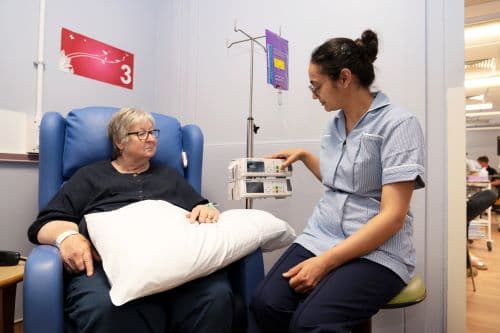
If you’re staying in hospital for chemotherapy, you’ll have it through a pump attached to a drip stand. The drip stand is on wheels and the pump works on a battery so you can walk about with it.
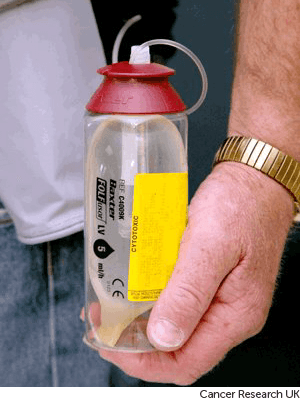
A continuous pressure pump gives a low dose of chemotherapy 24 hours a day. It contains a small balloon, which contains the chemotherapy drug. This connects to your central line by a plastic tube. The chemotherapy flows from the balloon and into your vein. The balloon will slowly deflate as you have the chemotherapy.
The pump is about the size of a small water bottle and is fitted at the hospital. You can usually go home with it, and it doesn't need a battery. You can carry it in a bag or belt holster, which they'll give you at the hospital.
You go back to the hospital after a few days or a week to have the pump changed or removed. Or a district nurse may be able to change it in your home.
There are also small battery operated pumps. You can carry these around like the continuous pressure pumps. They are sometimes called ambulatory pumps. There are different types and your nurse will show you how to operate yours.
You might need to have your battery operated pump changed from time to time. You can go back to hospital for this. Or a home chemotherapy nurse or a district nurse may be able to change it at home.
A Computerised Ambulatory Delivery Device (CADD pump) is a battery operated pump. It is attached to a cassette or infusion bag that contains the chemotherapy. This then fits inside a bag that you wear like a rucksack or bag around your waist.
Your chemotherapy nurse programmes the pump. It delivers the correct dose of chemotherapy at the right time, as prescribed by the doctor.
The CADD pump allows you to have the treatment at home. Or you might stay in a hotel or other residence nearby, which the hospital pays for.
Your nurse will show you or a family member how to look after the pump. Contact your chemotherapy nurse if you have any problems or questions when you get home.
Talk to your doctor or specialist nurse if you’re nervous about being at home with the chemotherapy pump. Once your questions are answered, you might feel better about it.
Very rarely, chemotherapy pumps can leak. If you are having your chemotherapy at home, you might get a kit to use if this happens. Your chemotherapy nurse will give you instructions on how to use it.
Last reviewed: 16 May 2024
Next review due: 17 May 2027
Coping with cancer can be difficult. There is help and support available. Find out about the emotional, physical and practical effects of cancer and how to manage them.
Search for the cancer type you want to find out about.
People usually have chemotherapy either at home, in hospital or at a day clinic. There are different ways of having chemotherapy drugs. Your doctor will talk about the most suitable option for you.
Where you have chemotherapy depends on the type of chemotherapy and on what care and support you need when you're having it.
Chemotherapy might affect your everyday life, from the way you feel to socialising and holidays. You can get tips and support to help you cope.
Chemotherapy is a standard treatment for some types of cancer. It uses anti cancer drugs to destroy cancer cells.

About Cancer generously supported by Dangoor Education since 2010. Learn more about Dangoor Education



Search our clinical trials database for all cancer trials and studies recruiting in the UK.

Connect with other people affected by cancer and share your experiences.

Questions about cancer? Call freephone 0808 800 40 40 from 9 to 5 - Monday to Friday. Alternatively, you can email us.
