Other treatments
You might also hear this treatment called ultraviolet light phototherapy. It can be used to treat:
cutaneous T cell lymphoma (CTCL) – a type of cancer affecting the skin
other skin conditions such as
Treatment lamps produce UV light rays to reduce on the skin. There are different types of UV light treatment:
narrowband ultraviolet B (NB-UVB) treatment – this is the most common type
psoralen ultraviolet light A (PUVA) treatment - this is less common
UV light treatment is a specialised treatment that you have at a phototherapy unit in a hospital.
In some rare cases you might have phototherapy at home.
This information is about having treatment as an in hospital.
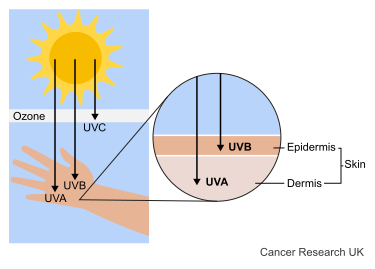
UV radiation is a type of energy that is naturally released by the sun. In UV light treatment your treatment team uses the ultraviolet part to give phototherapy.
There are 3 main types of ultraviolet rays, or wavelengths. These are:
ultraviolet A (UVA)
ultraviolet B (UVB)
ultraviolet C (UVC)
UVB rays reach the outer layer of the skin. This is the epidermis. UVA rays reach the inner layers of the skin. This is the dermis.
UVC rays don’t reach the earth’s surface and are not used in treatment.
You have UV treatment with a UV cabinet. This is controlled and closely monitored. It produces UVA or UVB rays from fluorescent tubes.
You usually stand in a cubicle lined with fluorescent tubes.

Or you might only need to put one area, like your hands, into a small machine.
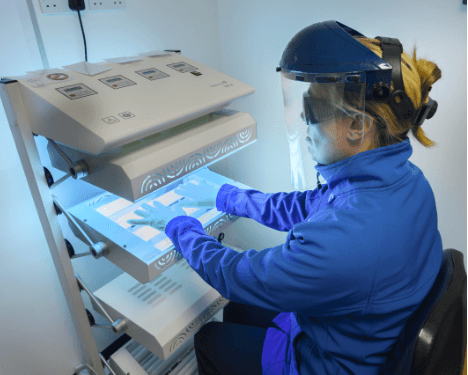
Narrowband means that the treatment uses a small part of the UVB light range to treat the skin condition.
UVB treatment is usually more effective than sunlight because harmful and ineffective sunlight rays are filtered out.
PUVA combines a drug called psoralen (P) with UVA rays. Psoralen makes your skin sensitive to light. This means you absorb the UVA light into the deeper layers of the skin.
You might have UV light treatment for cutaneous T cell lymphoma (CTCL). This is a rare type of that affects the skin. You might have NB-UVB or PUVA treatment for CTCL.
NB-UVB or UVA treatments are also used for many skin conditions. Some of these include:
psoriasis
eczema
graft versus host disease (GvHD)
The type of light treatment you have depends on several factors including:
how thick the are on your skin
what other treatments you are having
Your doctor or nurse will let you know more about your treatment options.
You have ultraviolet light treatment as an outpatient at the hospital. You usually have it 2 to 3 times per week.
Your doctor or specialist nurse will talk with you beforehand. They will tell you how you will have treatment and exactly what it involves.
Before your first planned treatment you have a few small test doses. This is to test how your skin reacts to the treatment. It also helps the healthcare team to work out the starting dose of treatment.
Your nurse or doctor usually checks your skin before each treatment.
The following information is how you should take care of your skin before ultraviolet light treatment.
Don't apply creams, deodorants, perfumes, aftershave lotions or makeup unless your doctor or nurse says you can. This is because some of these products contain substances which make your skin more sensitive to light which can cause burning. These are called photosensitisers. Or the products might prevent the UV treatment being absorbed. Please speak to your nursing team about the right moisturiser to use beforehand that helps your skin to absorb the ultraviolet light.
Tell your treatment team about any medicines, herbal remedies or vitamins you are taking. Or if these have changed while you are having treatment. This is because some medicines can cause photosensitivity.
Let your doctor or nurse know if you have had a haircut or an area of skin has become exposed such as shaving off your beard.
Let your doctor or nurse know if you are pregnant or are trying to get pregnant.
People who are pregnant or breastfeeding can have NB-UVB treatment.
Folic acid is an important vitamin for the development of the baby’s brain and spine. NB-UVB treatment can lower the levels of folic acid. This means that you need to take additional folic acid if you become pregnant.
NB-UVB treatment can cause patches of darkening on the face during pregnancy. You usually wear a shield to the face if it is not in the treatment area.
You cannot have PUVA treatment if you are pregnant or breastfeeding. You should use reliable contraception throughout your course of treatment if there is any chance you could become pregnant.
You remove your jewellery, watch and clothes just from the area where you are having treatment.
You should wear the same clothes each treatment, so it covers the same area each time. This is because the dose of treatment increases at each session. So it might cause burning if a different area of skin is exposed.
Everyone wears goggles. This is to protect your eyes from the UV light. The hospital provides these.
You might wear a visor to protect your face if it isn’t in the treatment area.
You must cover your if you’re male, this may be with a black sock or jockstrap. Keep all the coverings in place during the light treatment.
You then stand in the cubicle with the door closed and the fluorescent tubes switched on.
You might feel quite warm. This is normal. You are inside the cubicle for up to 10 minutes, but usually for a much shorter time.
You still wear goggles if you’re just having treatment to a smaller area.
You have NB-UVB treatment 2 to 3 times a week. You have treatment for approximately 10 to 15 weeks depending on how well it’s working.
This is about 24 to 30 treatments.
There are possible risks and side effects to all treatments including NB-UVB treatment.
Your doctor or nurse gives you instructions after your treatment. It's important to follow these to prevent serious side effects.
It's very important to protect yourself from the sun to reduce the risk of sunburn after treatment. Things that you should do include:
Keep your skin and lips covered from sunlight or sun lamps. Wear sun protection factor (SPF) lip balm and sunscreen.
Use a high SPF sunscreen of at least SPF 50 with a 4 or 5 star UVA protection. Apply this onto all areas of skin exposed to light. Reapply regularly and after you have been in contact with water.
NB-UVB treatment can cause a skin rash. It is called a polymorphic light eruption. It looks like small red or dark bumps. But in some cases, you might have larger areas of red or dark changes, or small blisters. This is a more severe side effect that can happen from time to time.
Let your healthcare team know if you notice these skin changes. You might be able to have creams or medicines to help.
Depending on your skin tone, your skin might go pink, red or purple. Or you might notice that you have areas of skin that get darker.
Generally, this develops about 3 to 5 hours after NB-UVB treatment. It is usually at its worst between 12 and 24 hours after treatment. It usually gets better around 3 days after treatment. The timing can vary. It depends on your dose of NB-UVB.
You might have itchy skin after NB-UVB treatment. Let your team know if you are itchy. Ask if you can have medicines such as creams or to help relieve the itching.
If you are prone to getting cold sores, this treatment can increase your chance of getting them. Let your healthcare team know. They can give you advice on how to lower the risk of getting one during treatment.
You usually take psoralen as tablets. Less commonly, you might have psoralen as a liquid that you put into the bath and soak in.
You swallow your tablets with a small amount of food or milk as it can make you feel sick. You wait for 2 hours for your body to absorb the psoralen.
You remove your jewellery, watch and your clothes from the treatment area.
You put on goggles to protect your eyes from the UV light. You might wear a visor to protect your face if it isn’t in the treatment area.
You cover your genitals if you’re male, this may be with a black sock or jockstrap. Keep all coverings in place during the light treatment.
You stand in a cubicle with the door closed and the fluorescent tubes switched on.
The light treats the sensitised skin cells. You might have some tingling or heat in your skin. This is normal and not harmful.
The dose and amount of time you need to spend in the cubicle depends on several factors including:
your type of skin condition
your skin tone
For CTCL you might have PUVA treatment 2 times a week for up to 30 treatments.
You might need future treatments if your skin gets worse again. Some people might have a repeat course of treatment, usually after a year or so.
You can't usually have more than 5 courses of PUVA over your lifetime. But sometimes, you might be able to have extra courses for your hands and feet.
Get more information on CTCL and its treatment
As with all treatments, PUVA has some side effects. Psoralen is a photosensitiser. This means that it makes your skin and eyes very sensitive to light.
Your doctor or nurse gives you information to follow after your treatment. It's important to follow these to prevent serious side effects.
Eye protection is very important. The psoralen tablet makes you sensitive to the light. So eye damage can be caused by:
sunlight
daylight
light through a window
You must wear eye protection until at least the end of daylight hours on the day of your psoralen. This means wearing sunglasses when exposed to the sun. You need to wear sunglasses outside even on cloudy days, until the end of daylight. If you are near a sunny window inside, you must also wear them.
Your nurse can test your glasses to make sure they have enough protection. If you don’t wear eye protection, you might have permanent eye damage.
Psoralen makes the skin more sensitive to light. You will burn more easily than usual in the sun, especially on the day you have treatment. It's very important to protect yourself from the sun.
Don’t expose your skin or lips to sunlight or sun lamps for 24 hours after taking the psoralen. Wear SPF lip balm and sunscreen.
Use a high SPF sunscreen of at least SPF 50 with a 4 or 5 star UVA protection. Apply this onto all areas of skin exposed to light. Reapply regularly and after you have been in contact with water.
On treatment days make sure that all your skin is covered by wearing long sleeved clothing, gloves, and enclosed shoes. You also need a wide brimmed hat to protect your face, ears and head.
Psoralen may make you feel sick for a few hours after you take it. Try eating little and often. Tell your doctor or nurse if you feel sick. They can give you anti sickness medicine.
Depending on your skin tone, your skin might go pink, red or purple. Or you might notice that you have areas of skin that get darker.
This skin change generally happens about 2 to 5 days after the day of treatment.
You may have itchy skin for a few days after PUVA treatment. Check with your team, but using non perfumed moisturisers after the treatment can help.
PUVA treatment can cause a skin rash. It is called a polymorphic light eruption. It is usually mild but can be severe. It looks like small red or dark bumps. But in more severe cases you might have larger areas of red or dark changes. Or you might have small blisters.
Let your healthcare team know if you see these skin changes. You might be able to have creams or medicines to help.
The possible long term side effects include:
ageing of the skin
skin darkening and increased freckling
an increased risk of skin cancer – this is not a risk factor for a one off course of treatment
The skin cancer risk is higher in fair skin and after multiple treatment courses. Your doctor will discuss the risks, benefits and possible side effects of the treatment with you.
Last reviewed: 08 Sept 2025
Next review due: 08 Sept 2028
Cutaneous T cell lymphoma (CTCL) is the most common type of skin lymphoma. The most common types of CTCL are mycosis fungoides (MF) and Sezary syndrome.
Graft versus host disease (GvHD) is a possible complication after a bone marrow or stem cell transplant from another person. It can be a temporary or chronic condition but there are many ways to treat it.
Treatments can include surgery, radiotherapy and drug treatments (such as chemotherapy, hormone therapy or targeted cancer drugs). Find out about treatments and how to cope with side effects.
These are cancer treatments using medical technologies (interventional treatments) including laser treatment, photodynamic therapy and cryotherapy.
Search for the cancer type you want to find out about. Each section has detailed information about symptoms, diagnosis, treatment, research and coping with cancer.

About Cancer generously supported by Dangoor Education since 2010. Learn more about Dangoor Education



Search our clinical trials database for all cancer trials and studies recruiting in the UK.

Connect with other people affected by cancer and share your experiences.

Questions about cancer? Call freephone 0808 800 40 40 from 9 to 5 - Monday to Friday. Alternatively, you can email us.
