Types
The information on this page is about astrocytomas in adults. We also have information about astrocytomas in children.
Read about astrocytomas in children
Astrocytomas develop from a type of glial cells called astrocytes. Astrocytes are star shaped cells. They support the nerve cells (neurones) in the brain.
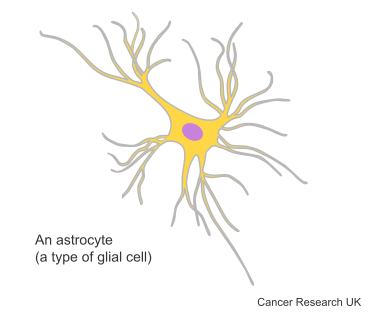
Read about glial cells and the different parts of the brain
Doctors use a system to group (classify) brain tumours into different groups (categories) and types. The World Health Organisation (WHO) regularly update this system. The information in this page is based on the latest WHO classification of 2021.
Astrocytomas are a type of brain tumour that belongs to a group of brain tumours called gliomas.
Doctors have changed the way they group and describe astrocytomas. All astrocytomas are now called:
astrocytoma, IDH mutant
Your doctor looks to see if there are certain gene changes in the brain tumour cells. These tests are also called biomarker or molecular studies. Your doctor uses these test results to decide what type of glioma you have.
IDH (isocitrate dehydrogenase) is a gene. Your doctor looks for permanent changes (mutations) in the IDH gene.
Your doctor diagnoses:
astrocytoma, IDH mutant - if you have changes (mutations) in the IDH gene
glioblastoma, IDH wildtype - if you don’t have changes in the IDH gene (the term ‘wildtype’ describes an unchanged gene)
This page is about astrocytoma, IDH mutant.
Some astrocytomas are very localised (focal). This means it is easy to see the border between the tumour and the normal brain tissue on a scan or during surgery. Doctors call these circumscribed astrocytomas. These are more common in children.
Other astrocytomas are called diffuse astrocytomas. They don’t have a clear boundary between the tumour and the normal brain tissue. Most grade 2 astrocytomas are diffuse.
Astrocytomas are put into groups according to how quickly they are likely to grow. These are called grades.
The grade depends on how the cells look. Generally, the more normal the cells look, the lower the grade. The more abnormal the cells look, the higher the grade. Grade also depends on genes and proteins in the tumour cells.
There are 3 grades of IDH mutated astrocytomas:
grade 2 (diffuse)
grade 3 (anaplastic)
grade 4
Find out more about grades of brain tumours
Around 9 out of every 100 brain tumours (around 9%) diagnosed in England between 1995 and 2017 were astrocytomas. This doesn’t include glioblastomas.
You have tests to diagnose an astrocytoma. Your doctor checks the size of the tumour and its location. This helps your doctor plan your treatment. The tests you might have include:
MRI scan or CT scan
a test of your neurological system (neurological examination)
a biopsy
We have more information about the tests you might have to diagnose a brain tumour
The main treatments for astrocytoma are:
surgery
radiotherapy, which uses high energy x-rays to destroy cancer cells
chemotherapy, which uses cytotoxic drugs to destroy cancer cells
Your treatment depends on the grade of your astrocytoma. It also depends on whether you have changes (mutations) in certain genes.
You have regular appointments with your doctor or nurse after treatment finishes. Your doctor examines you at each appointment. They ask how you are feeling, whether you have had any symptoms or side effects, and if you are worried about anything. You might also have MRI scans on some visits.
How often you have check ups depend on your individual situation.
You might have an MRI scan every 3 to 6 months, for two years. You then have an MRI scan every 6 months or every year.
Read more about follow up appointments after treatment for brain tumour
Coping with a diagnosis of a brain tumour can be difficult, both practically and emotionally. It can be especially difficult when you have a high grade tumour. Being well informed about the type of tumour you have, and its treatment can make it easier to cope.
Find out what you can do, who can help and how to cope with a brain tumour
Doctors are always trying to improve the diagnosis and treatment of brain tumours. As part of your treatment, your doctor might ask you to take part in a clinical trial. This might be to test a new treatment or look at different combinations of existing treatments.
Find out about the latest UK research and how you can take part in a clinical trial
Last reviewed: 07 Jun 2023
Next review due: 07 Jun 2026
Primary brain tumours are tumours that start in the brain. They can start anywhere in the brain and there are many different types of tumour.
Common symptoms of brain tumours include headaches, feeling or being sick and seizures (fits).
Treatment for a brain or spinal cord tumour depends on the type of tumour you have, where it is and your general health.
There is practical and emotional support available to help you, your family and your friends cope with a brain or spinal cord tumour.
The grade of a brain tumour gives doctors an idea of how fast or slow the tumour might grow.
Primary brain tumours are cancers that start in the brain. Tumours can start in any part of the brain or related structures.

About Cancer generously supported by Dangoor Education since 2010. Learn more about Dangoor Education



Search our clinical trials database for all cancer trials and studies recruiting in the UK.

Connect with other people affected by cancer and share your experiences.

Questions about cancer? Call freephone 0808 800 40 40 from 9 to 5 - Monday to Friday. Alternatively, you can email us.
