Tests and scans
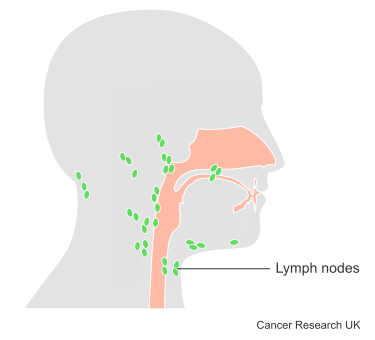
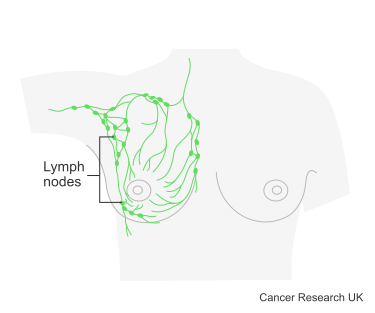
A lymph node biopsy is when a doctor checks and removes a small piece of tissue or sample of cells from one of your lymph nodes. The doctor sends this to the laboratory and a specialist doctor called a pathologist examines it under a microscope.
To check the lymph nodes, you have an ultrasound. Ultrasound scans use high frequency sound waves to create a picture of a part of the body.
If doctors find any abnormal areas, they can use the ultrasound to guide a needle and take a biopsy.
You usually have this test as an outpatient in your hospital imaging department.
Depending on where in your body the lymph nodes are, your doctor may also use a CT scan to guide the biopsy needle. These are CT guided lymph node biopsies.
You usually have a lymph node biopsy under . Occasionally, you may have it under general anaesthetic. This means that you are asleep and won’t feel anything.
We have information about having a biopsy under general anaesthetic
Lymph nodes can become enlarged (swollen) for different reasons. The most common reason is when you have an infection. For example, an infection in your ear or throat can make the lymph nodes in your neck swollen. Swollen lymph nodes caused by infections usually reduce size within 1 to 2 weeks.
Lymph nodes are also often the first place cancer cells spread to when they break away from the . Your doctor might ask you to have a lymph node ultrasound and biopsy to:
find out if a cancer has spread into your lymph nodes
help diagnose cancer if you have a swollen lymph node
Search for the cancer type you want to find out about in our A to Z list of cancer types
Check your appointment letter for instructions on how to prepare for this test. You should be able to eat and drink normally beforehand.
Take your medicines as normal unless you’re told otherwise. Let your doctor know if you take medicines to thin your blood such as warfarin. You might need to stop them for a few days before the test.
On the day of the test, your doctor explains what will happen. They might ask you to sign a consent form. This is a good time to ask any questions you might have.
A nurse or other healthcare professional will ask you to change into a hospital gown. They then take you into the ultrasound room.
Your nurse or doctor asks you to lie down on the scanner couch. Depending on where you are having the scan, your doctor may ask you to put your arms over your head.
A specialist doctor called a radiologist usually does the scan. They put a gel on the skin over the area where the lymph nodes are.
The ultrasound scanner has a microphone or probe that gives off sound waves. The sound waves bounce off the organs inside your body and are picked up by the microphone. The microphone links to a computer that turns the sound waves into a picture.
They then put the handheld ultrasound probe over the skin.
You might feel a little pressure when they move the probe. This shouldn’t hurt but tell your doctor if this is uncomfortable for you.
If your lymph nodes look normal, they will finish the scan. Or they might ask to take a biopsy if they see any changes on the ultrasound.
Before taking the biopsy, your doctor cleans the skin. They then use a local anaesthetic to numb the area where the abnormal lymph node is. This might sting a little.
When the area is numb, they put a thin needle attached to a syringe through your skin. They then draw back some cells and fluid into the syringe.
They might also take out some tissue using a special biopsy needle.
You might feel some pressure and it can sometimes feel uncomfortable. Do let your doctor know if it is painful. You may need more local anaesthetic.
Your doctor removes the needle once the sample is taken. They put pressure on the area where you had the biopsy for a few minutes after the test. This is to reduce the risk of bleeding and bruising.
Your doctor sends the fluid and tissue sample to the laboratory. A specialist doctor called a pathologist looks at the sample under a microscope. They can see if you have cancer in your lymph nodes.
You should be able to go home soon after the test. You have a small dressing over the area where they took the biopsy. Your doctor or nurse will tell you how to look after this for the next few days.
Last reviewed: 11 Apr 2025
Next review due: 11 Apr 2028
Find out about tests to diagnose cancer and monitor it during and after treatment, including what each test can show, how you have it and how to prepare.
Search for the cancer type you want to find out about. Each section has detailed information about symptoms, diagnosis, treatment, research and coping with cancer.
An ultrasound scan is a test that uses high frequency sound waves to create a picture of a part of the inside of your body. Find out about some of the different types of ultrasound scans used for cancer.
A biopsy means taking a sample of tissue so that it can be looked at under a microscope. There are different types of biopsy.

About Cancer generously supported by Dangoor Education since 2010. Learn more about Dangoor Education

What to ask your doctor about clinical trials.

Meet and chat to other cancer people affected by cancer.

Questions about cancer? Call freephone 0808 800 40 40 from 9 to 5 - Monday to Friday. Alternatively, you can email us.
Image by credit test.