Brain tumours
Our body is made up of billions of cells that can only be seen under a microscope. Normally, cells only divide to replace old and worn out cells. A brain tumour develops when something inside a cell goes wrong, making the cell carry on dividing until it forms a lump or a tumour.
Read more about how cancer starts
This is different from cancers that have spread to the brain from somewhere else in the body. These are called secondary brain cancers or brain metastases. The information on this page is about primary brain tumours.
Find out more about secondary brain cancers
The brain is made of different tissues and cells which can develop into different types of tumours. There are over 100 different types of brain tumours.
We have information about the most common types of brain tumours
Generally, brain tumours can be benign (non cancerous) or malignant (cancerous).
Benign tumours usually grow slowly. They are less likely to come back after treatment or to spread to other parts of the brain. Your doctor might refer to some benign brain tumours as low grade.
Each year around 6,500 people are diagnosed with a benign or an uncertain or unknown behaviour brain tumour in the UK. An uncertain or unknown behaviour tumour means that doctors can't tell how the tumour will behave.
Malignant brain tumours grow faster than benign tumours. They are more likely to come back after treatment and to spread to other parts of the brain. Your doctor might refer to malignant brain tumours as high grade.
Each year around 5,800 people are diagnosed with a malignant brain tumour in the UK.
Read more about the different grades of brain tumours
The brain and the spinal cord make up the central nervous system (CNS). The CNS is made up of different types of cells and tissues. Brain tumours are usually named after the cell or tissue they started in.
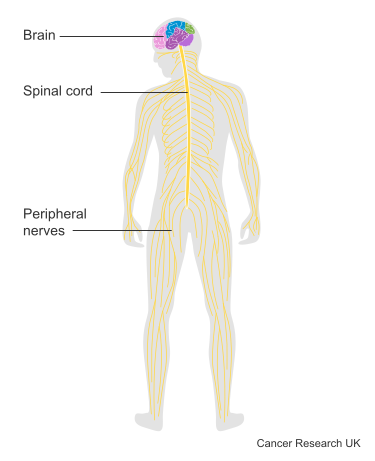
Find out more about the brain and the spinal cord
Primary brain tumours are relatively rare. Around 12,300 people are diagnosed with a brain tumour in the UK each year. This includes tumours in other parts of the central nervous system such as the:
spinal cord
covering of the brain (meninges)
nerves leading from the brain
Brain tumours are more common in older people. Almost 25 out of every 100 people (almost 25%) diagnosed with a brain or spinal cord tumour in the UK every year are aged 75 or older.
Tumours affecting the brain and spinal cord are the second most common type of children’s cancer in the UK.
We have separate information about brain tumours in children
This page is due for review. We will update this as soon as possible.
Last reviewed: 18 Jan 2023
Next review due: 18 Jan 2026
Common symptoms of brain tumours include headaches, feeling or being sick and seizures (fits).
The grade of a brain tumour gives doctors an idea of how fast or slow the tumour might grow.
There are many different types of brain tumours. They are usually named after the type of cell they develop from.
There are some factors that increase your risk of developing a brain tumour. These include being older, and a family history.
You usually start by seeing your GP who might refer you to a specialist. Or you might go to Accident and Emergency (A&E) if you suddenly have severe symptoms.
Treatment for a brain or spinal cord tumour depends on the type of tumour you have, where it is and your general health.

About Cancer generously supported by Dangoor Education since 2010. Learn more about Dangoor Education



Search our clinical trials database for all cancer trials and studies recruiting in the UK.

Connect with other people affected by cancer and share your experiences.

Questions about cancer? Call freephone 0808 800 40 40 from 9 to 5 - Monday to Friday. Alternatively, you can email us.
