Types of children's brain tumours
There are over 100 different types of tumour that can develop in the brain or central nervous system.
Brain tumours can start in any part of the brain or spinal cord (primary brain tumours). Or cancer can spread to the brain or spinal cord from somewhere else in the body. This is known as a secondary brain tumour or brain metastases. Secondary brain tumours are much less common in children than adults.
The names of the different types of brain tumours are based on:
the type of cell they develop from
the area of the brain they are growing in
the genetic changes found in the tumour. A doctor might call these gene changes a biomarker or molecular marker
whether it mostly develops in children or adults
The most common types of brain tumours in children are:
astrocytoma (glioma)
ependymoma
medulloblastoma
There are many other types, including:
germ cell tumours
choroid plexus tumours
embryonal tumours with multi layered rosettes
craniopharyngiomas
atypical teratoid rhabdoid tumour
pineoblastoma
Astrocytomas are a type of brain tumour also called a glioma. This is because they develop from a type of glial cell called an astrocyte. They can develop anywhere in the brain.
Most astrocytomas in children are low grade. This means the tumour cells look similar to normal cells. The tumours grow fairly slowly and are less likely to spread. Less commonly the astrocytoma is high grade. These tumours tend to grow more quickly and are more likely to spread to other areas of the brain or spine. It is extremely rare that they spread to other areas of the body.
Astrocytomas are the most common type of brain and spinal cord tumours in children. Around 175 children are diagnosed with an astrocytoma each year in the UK.
The most common subtype of astrocytoma is pilocytic astrocytoma. It is a type of low grade glioma. Around 90 children are diagnosed with this type each year.
These are tumours that develop on the nerves that carry information from the eye through the brain. They are mostly pilocytic astrocytomas. Children with the genetic condition most commonly develop this type of tumour.
These types of tumours are usually slow growing and cause changes to your child’s vision.
Diffuse midline glioma used to be called diffuse intrinsic pontine glioma (DIPG). It may also be called a brainstem glioma.
These tumours contain a known genetic change called the biomarker H3 K27M mutation.
Diffuse midline gliomas are high grade and grow quickly. This means symptoms develop quickly.
Surgery is not usually possible for these tumours. This is because the tumour is in such a delicate and important area of the brain. Doctors usually use radiotherapy to treat them. Researchers are looking into how they can improve the diagnosis and treatment of children with these types of tumours.
Find out more detailed information about astrocytomas in children
Ependymomas usually start from ependymal cells. These cells line the fluid filled areas of the brain (ventricles) and the spinal cord. Their job is to repair any damaged nerve tissue.
They are most common in young infants, aged up to 5 years. Around 30 children are diagnosed with ependymoma every year in the UK.
Find out more about ependymomas and its treatment
These types of tumours develop from cells left over from early development in the womb. All embryonal tumours are grade 4. This means they are high grade (malignant).
There are several different types of embryonal tumours. Each type can be further divided into subtypes. This is based on their genetic and molecular information. Some of the main types include:
medulloblastoma
embryonal tumours with multi layered rosettes (ETMR)
atypical teratoid rhabdoid tumour (ATRT)
pineoblastoma
Here is an overview of some of them:
Medulloblastoma is the most common cancerous (malignant) brain tumour in children. Adults can also get this type of tumour, but it is rare. These types of brain tumours are high grade because:
the tumour often grows quickly
they can spread to other areas of the brain and spinal cord
Medulloblastomas develop at the back of the brain in the cerebellum.
Doctors used to talk about medulloblastoma as a primitive neuro ectodermal tumour (PNET). This term is no longer used.
Find out more detailed information about medulloblastoma in children
Embryonal tumours with multi layered rosettes are a group of rare embryonal tumours. They’re grouped together because of what they look like under the microscope. These types of tumours can develop in different parts of the brain.
ETMR tumours are high grade and usually affect children up to the age of 3 years old.
The main treatments for ETMRs are:
chemotherapy
surgery
radiotherapy
These tumours are another type of rare embryonal tumour. The majority of these occur in children under 3 years of age. Very rarely they can occur in adults.
These tumours tend to be fast growing (high grade). They can develop in different parts of the brain.
The main treatments for ATRT include:
surgery
chemotherapy
high dose chemotherapy followed by an
radiotherapy
Pineoblastoma is a rare type of embryonal tumour. It mainly affects children in the first 2 years of life, but can happen at any age. These are high grade tumours that start in the . The pineal gland is in the centre of the brain.
The pineal gland’s main known job is to control your sleep pattern. So it makes the hormone serotonin in the day and then changes it into the hormone melatonin at night.
Doctors treat these tumours with a combination of:
surgery
chemotherapy
radiotherapy
Craniopharyngiomas (pronounced cran-ee-oh-fah-rin-gee-oh-mahs) are very rare brain tumours. There are 2 different types:
adamantinous craniopharyngioma (ACP)
papillary craniopharyngioma (PCP)
Adamantinous craniopharyngioma (ACP) are mostly found in children and teenagers. They can also occur in adults but this is less common. Papillary craniopharyngioma mainly occurs in adults.
Craniopharyngiomas are low grade tumours. This means that they are slow growing. Craniopharyngiomas do not usually spread.
These tumours usually grow near the base of the brain, just above the .
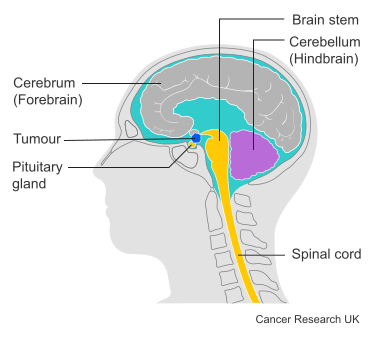
They develop close to important structures in the brain and can cause problems as they grow. They can cause changes in hormone levels and problems with eyesight.
Doctors usually treat craniopharyngioma with surgery and, if necessary, radiotherapy.
We have more information about craniopharyngioma. This information is for people of all ages with this type of tumour. Remember to click back to the children’s brain tumour section to learn more about:
diagnosis
treatment
support for children and families
Find out more about craniopharyngioma
Germ cell tumours are very rare in children. They are more common in teenagers and young adults. They grow from cells left over from the earliest development of the body in the womb. Normally these cells are harmless, but some can start to grow out of control.
There are two main groups of germ cell tumours. They are:
non germinomatous germ cell tumours (NGGCT) or secreting germ cell tumours
germinomas or non secreting germ cell tumours
There are many sub types of secreting germ cell tumours. These tumours make higher than normal amounts of substances that can show up in the blood or cerebrospinal fluid (CSF). These substances are tumour markers.
Your child might have a blood test or lumbar puncture if the doctor thinks they may have a secreting germ cell tumour. They look for tumour markers such as:
alpha fetoprotein (AFP)
beta human choriogonadotropin (beta HCG)
Germinomas or non secreting germ cell tumours don’t make the tumour marker AFP. But some do make slightly more than normal levels of the substance HCG. Doctors often diagnose these tumours from the biopsy.
The main treatments for germ cell tumours that secrete tumour markers are:
chemotherapy
radiotherapy
Your child might have surgery after chemotherapy and radiotherapy, but this is rare.
Germinomas generally respond well to radiotherapy and chemotherapy. Because of this, doctors are trying to reduce the amount of radiotherapy they give to children and young people with germinomas. They hope this will help reduce the long term effects of brain tumour treatment.
The choroid plexus is a network of blood vessels and cells. Its main job is to make cerebrospinal fluid.
These tumours are rare. They mainly affect children, but they can also affect teenagers and adults.
There are 3 subtypes of choroid plexus tumours. These are:
choroid plexus papilloma
atypical choroid plexus papilloma
choroid plexus carcinoma
Choroid plexus papilloma is the most common of the 3 types.
Each year in the UK around 7 children are diagnosed with choroid plexus papilloma. Around 4 children are diagnosed with choroid plexus carcinoma.
Treatment for each type of choroid plexus tumour is different. Most children with a choroid plexus papilloma only have surgery. Sometimes they might have other treatment beforehand such as chemotherapy. Children with atypical choroid plexus papilloma usually have surgery and chemotherapy.
Children who have choroid plexus carcinoma have surgery and chemotherapy, and some might have radiotherapy as well.
Some children with these tumours might have arterial to lower the risk of blood loss during surgery.
Children might develop a tumour in their spinal cord. These tumours are grouped together because they develop in the spine. But there are different types depending on the type of cell the tumour started in. Some of the types include:
astrocytomas
ependymomas
gangliomas
ATRT
germ cell tumours
Doctors treat these tumours with a combination of:
radiotherapy
chemotherapy
surgery
We have detailed information about:
astrocytoma
medulloblastoma
ependymoma
If your child has been diagnosed with another type of brain tumour you might find our general information on tests, treatment and support helpful.
Choose the information from our main page
This page is due for review. We will update this as soon as possible.
Last reviewed: 03 Jan 2023
Next review due: 03 Jan 2026
Tumours affecting the brain and central nervous system are the second most common type of children’s cancer in the UK. Around 420 children are diagnosed with these tumours each year in the UK.
Brain tumour symptoms can be very similar to those of childhood illnesses. Take your child to the GP if they have any symptoms of a brain tumour.
The main treatments for children’s brain and spinal cord tumours are surgery, radiotherapy and chemotherapy.
We don't know what causes or how to prevent most childhood cancers. There are some factors that can increase the risk of cancer in children.
It is essential that parents and other close family have support. Find out what is availble and who can help.
Brain tumours are the second most common type of children’s cancer in the UK. Around 420 children are diagnosed with these tumours each year in the UK.
About Cancer generously supported by Dangoor Education since 2010. Learn more about Dangoor Education



Search our clinical trials database for all cancer trials and studies recruiting in the UK.

Connect with other people affected by cancer and share your experiences.

Questions about cancer? Call freephone 0808 800 40 40 from 9 to 5 - Monday to Friday. Alternatively, you can email us.
